Byzantine Monuments and Monasteries
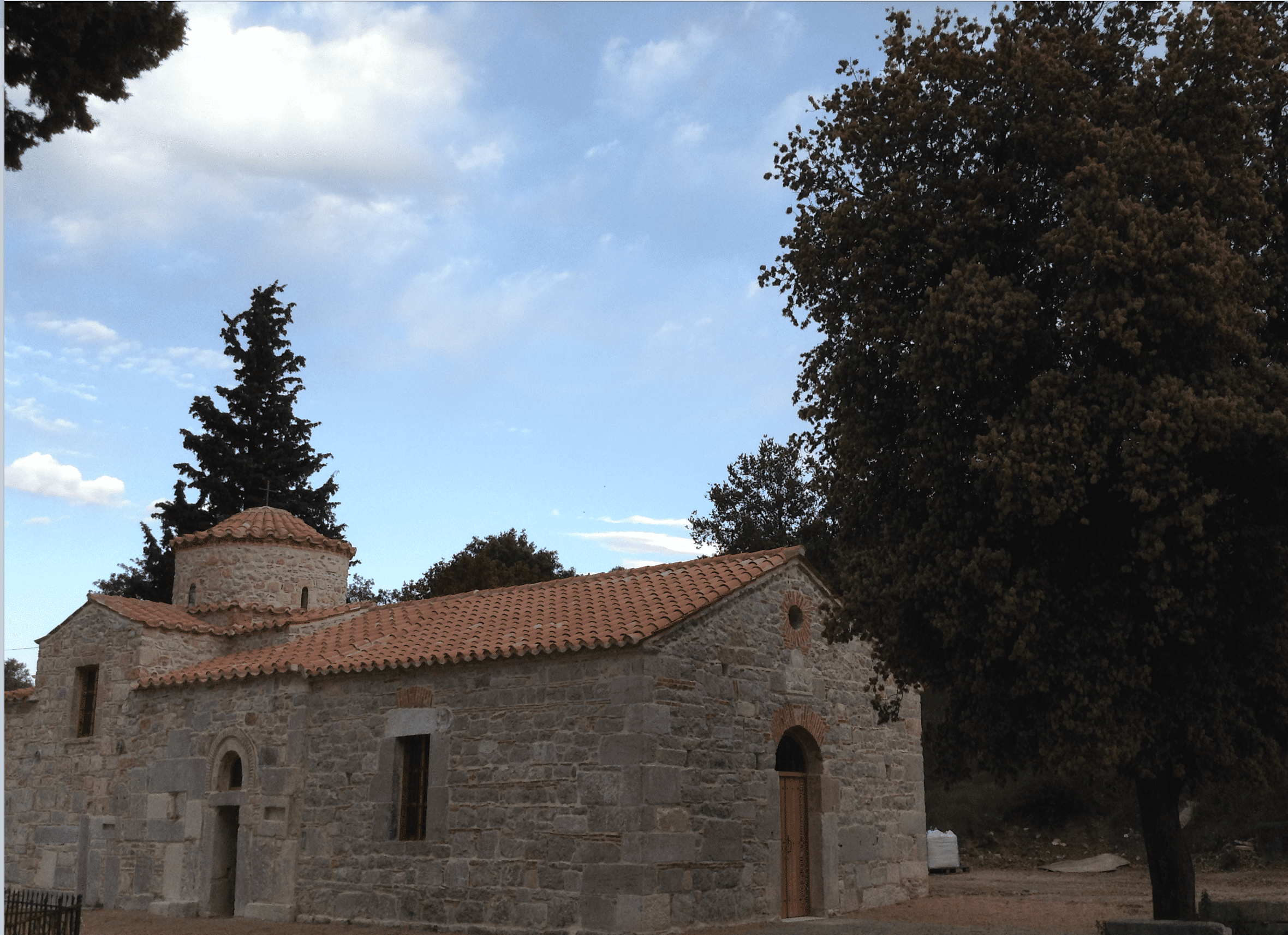
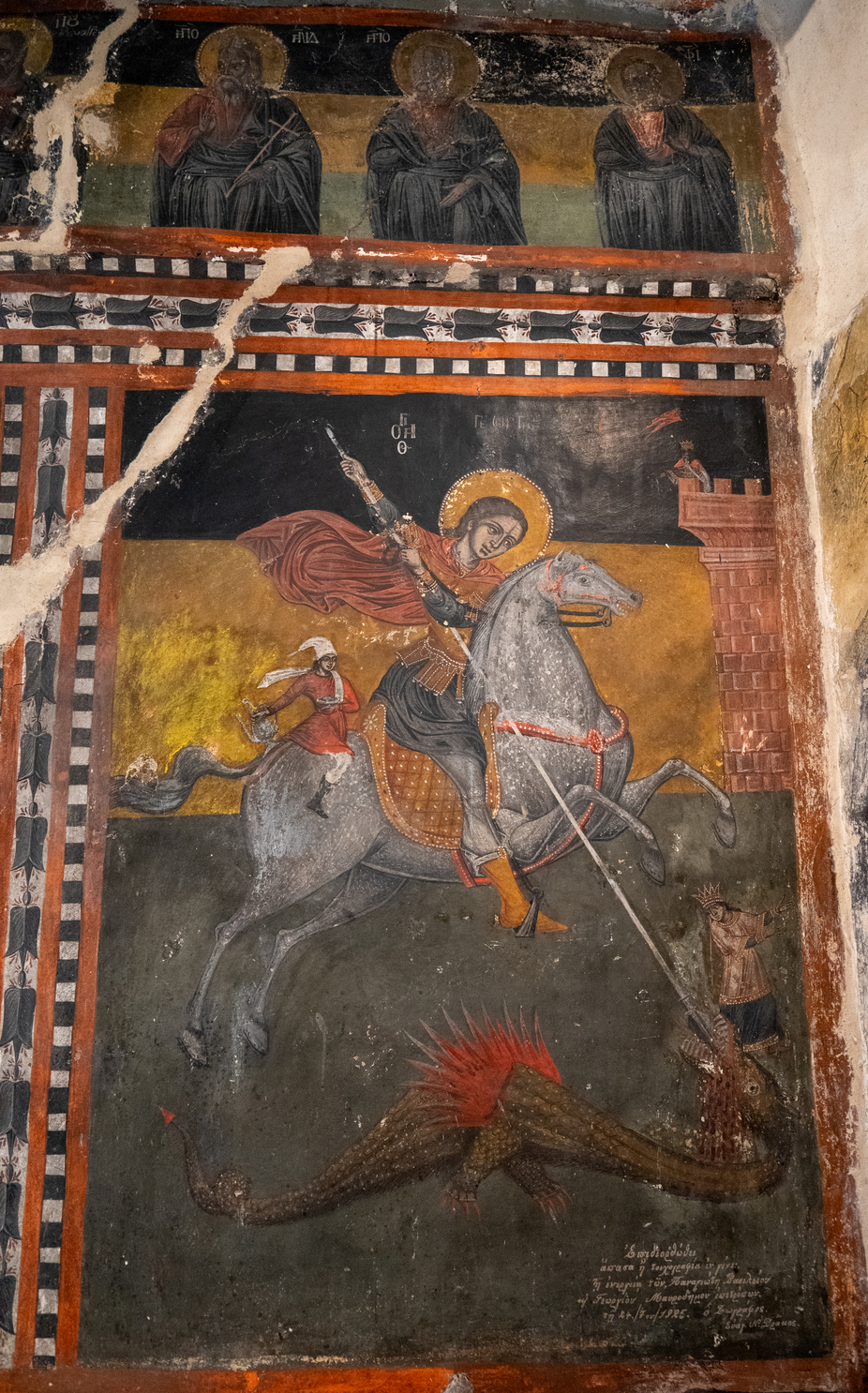
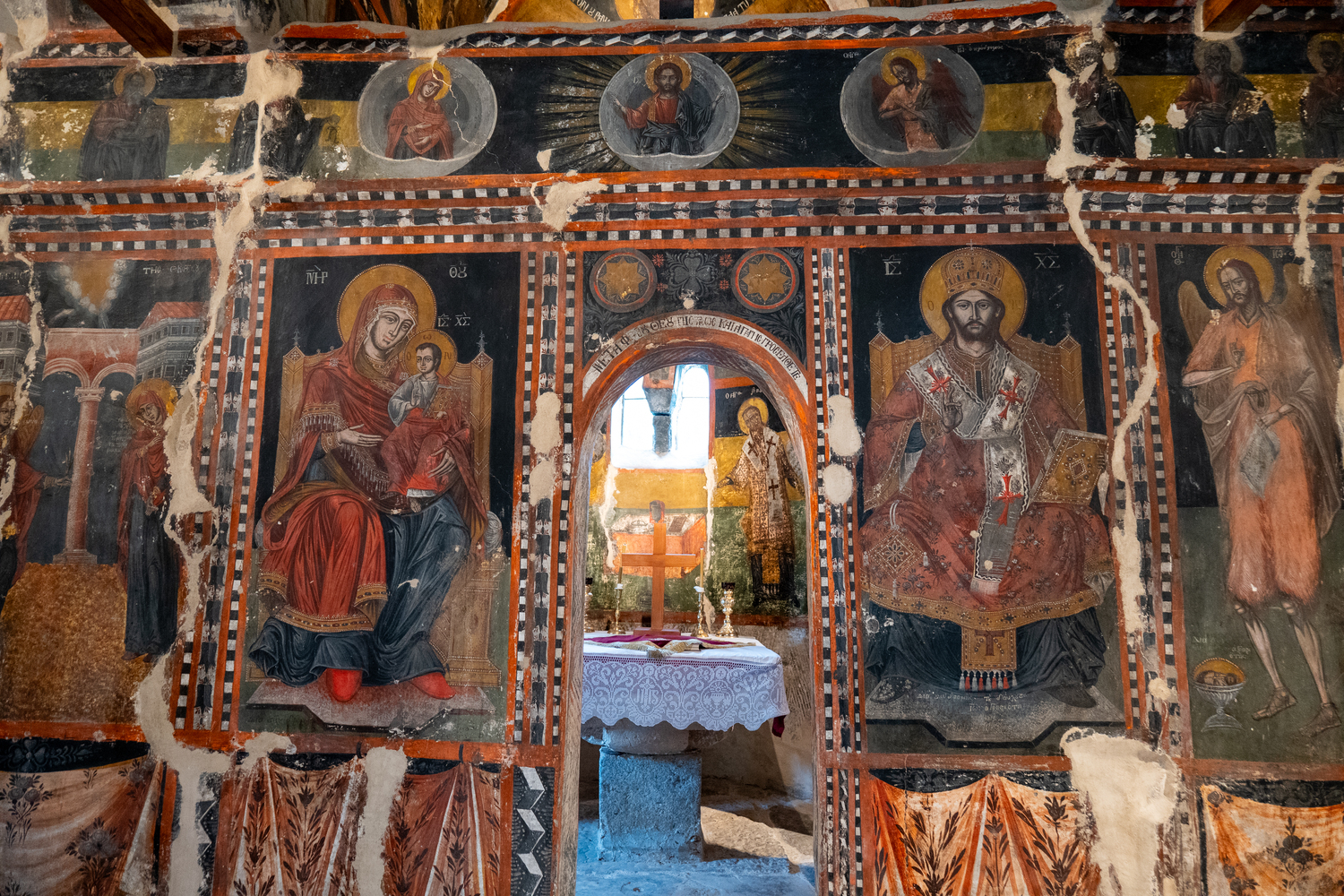
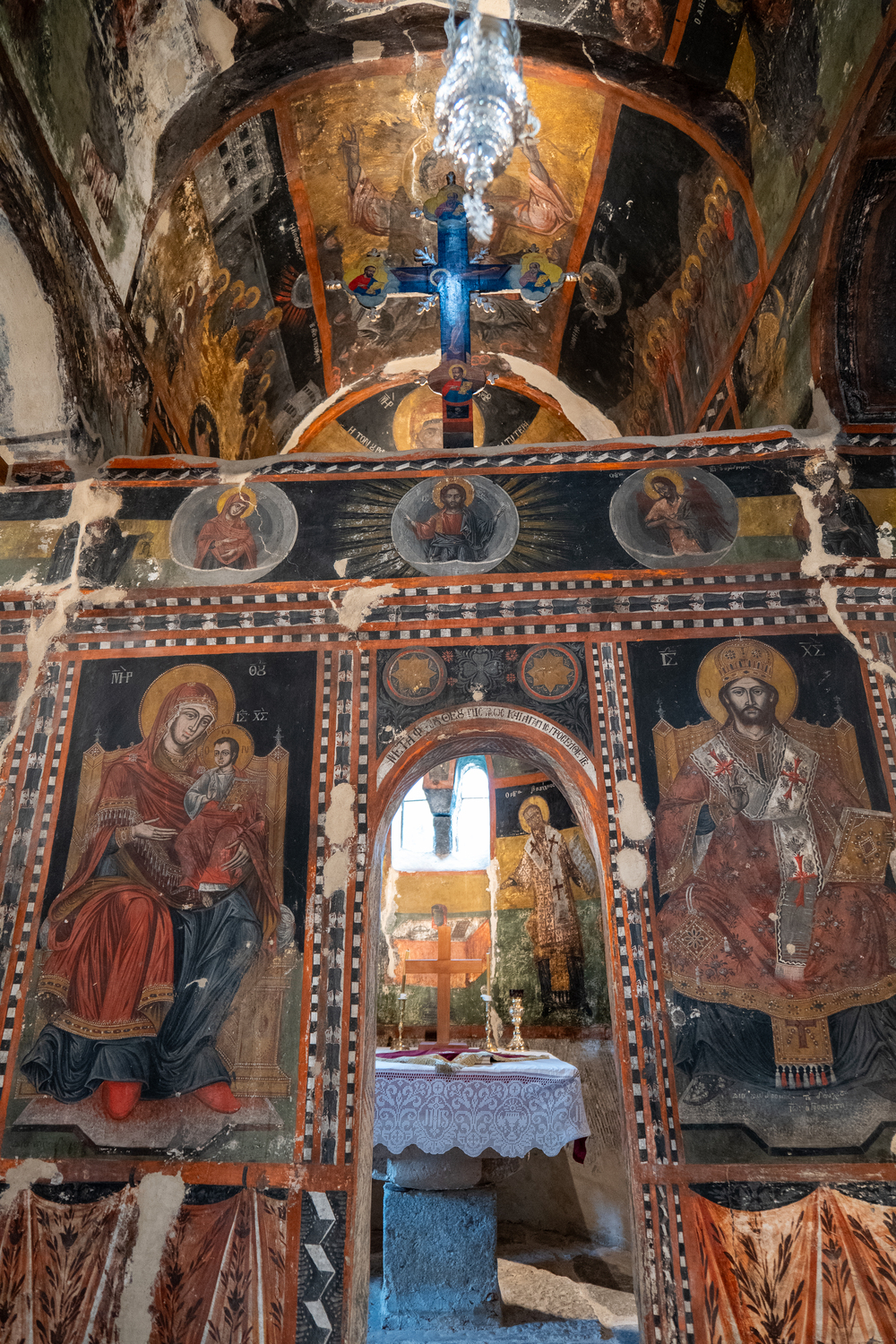
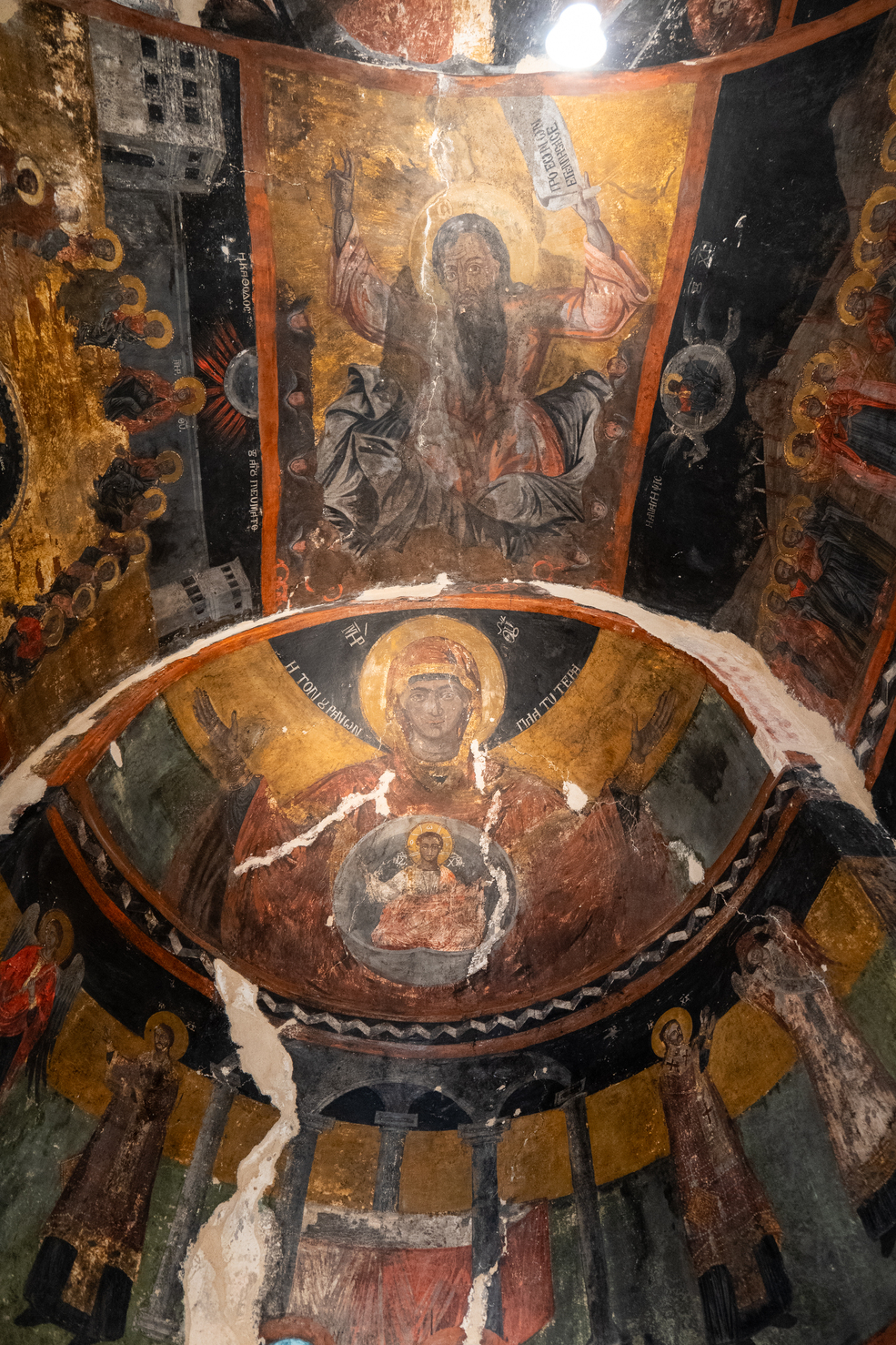
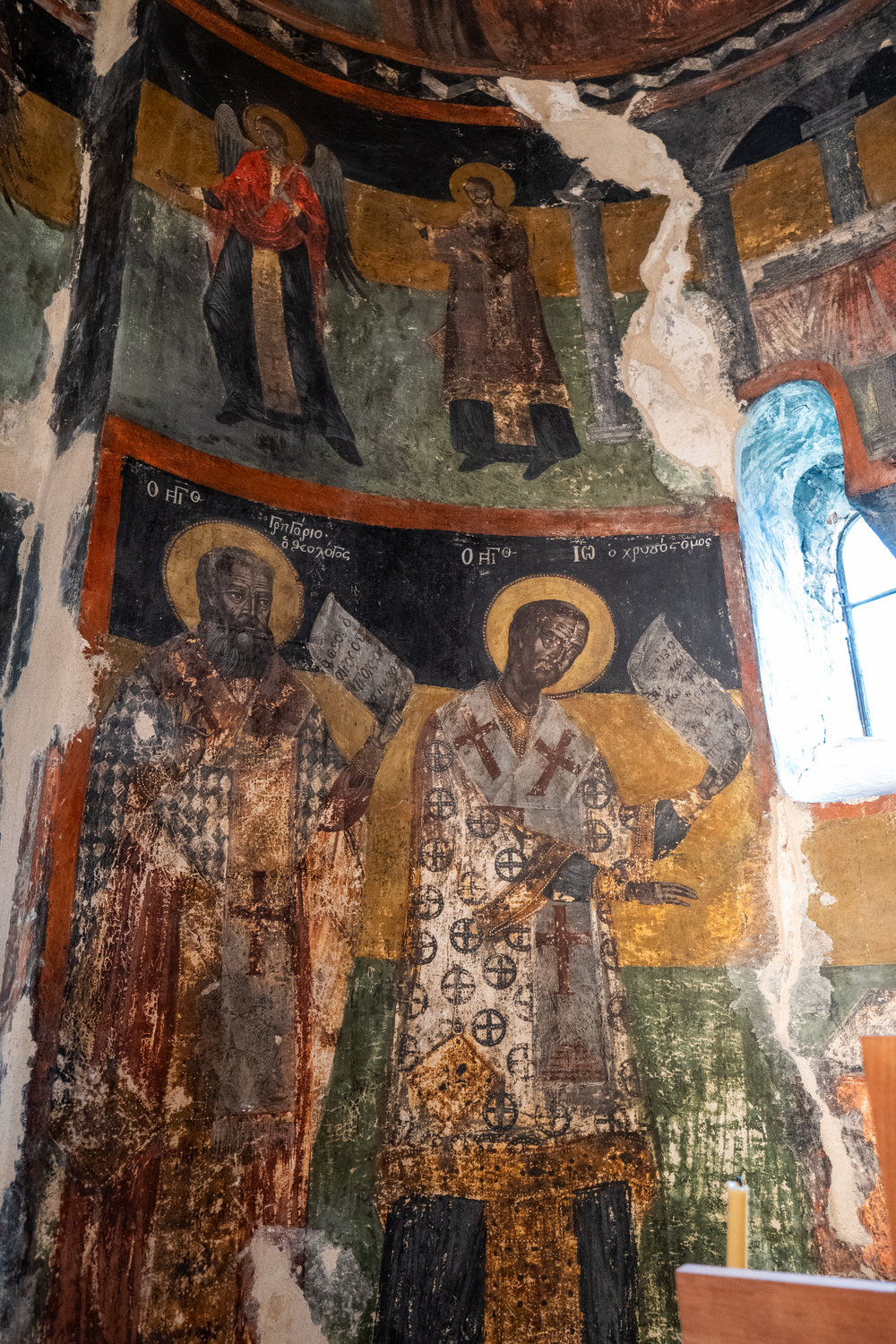
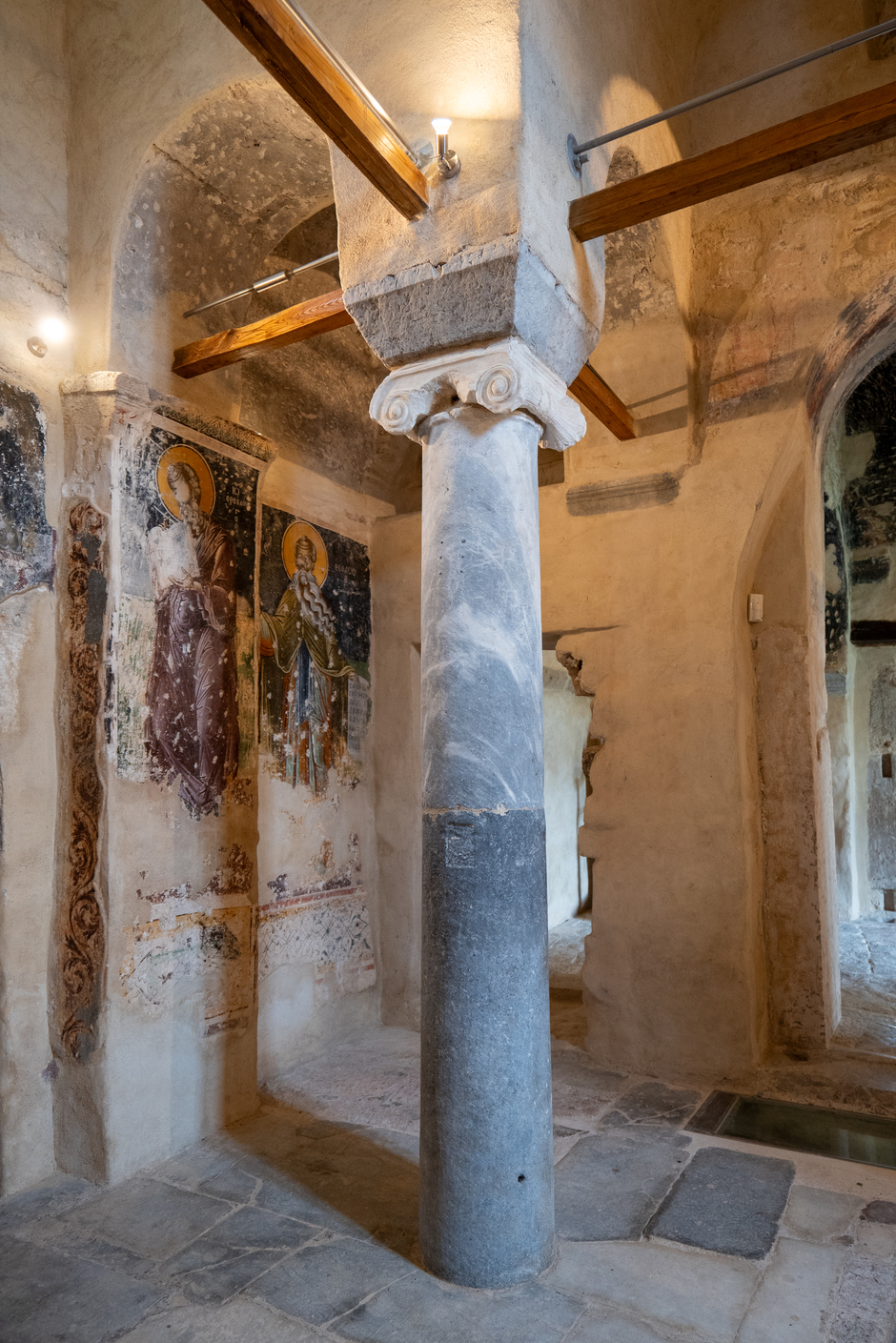
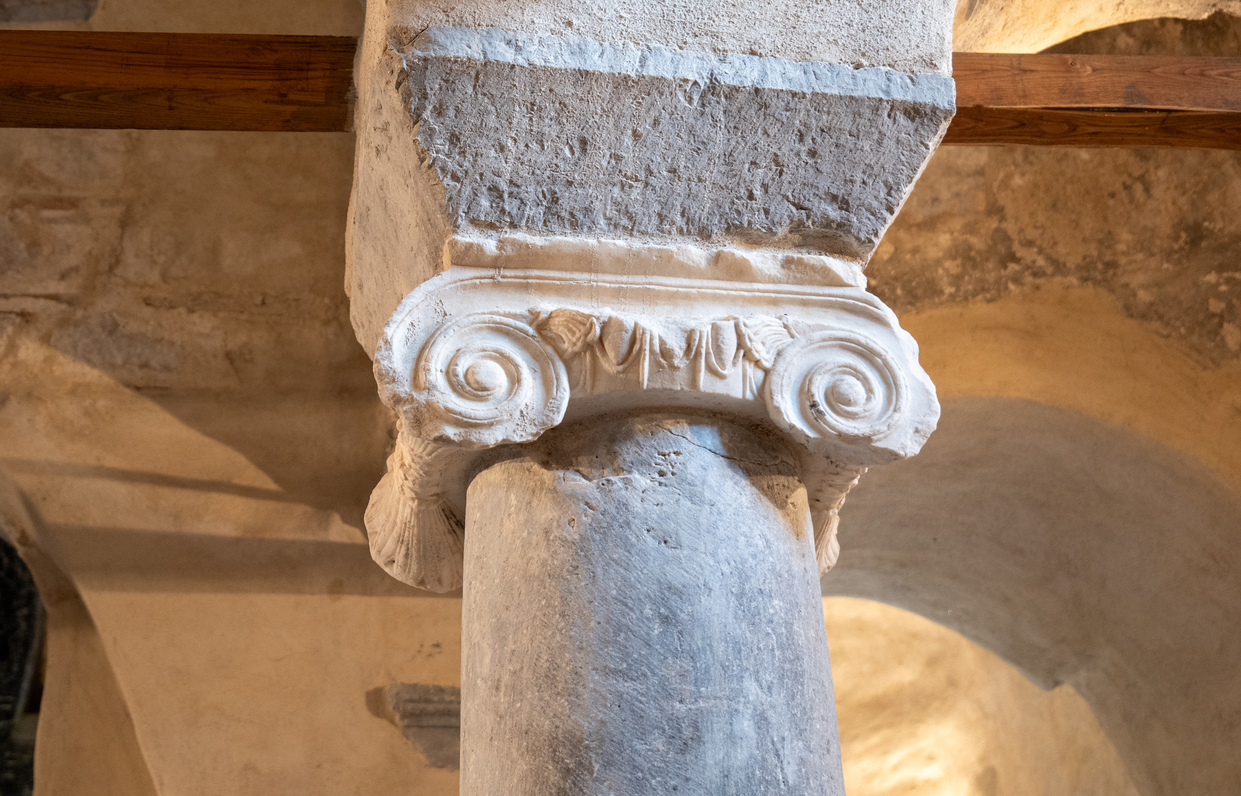
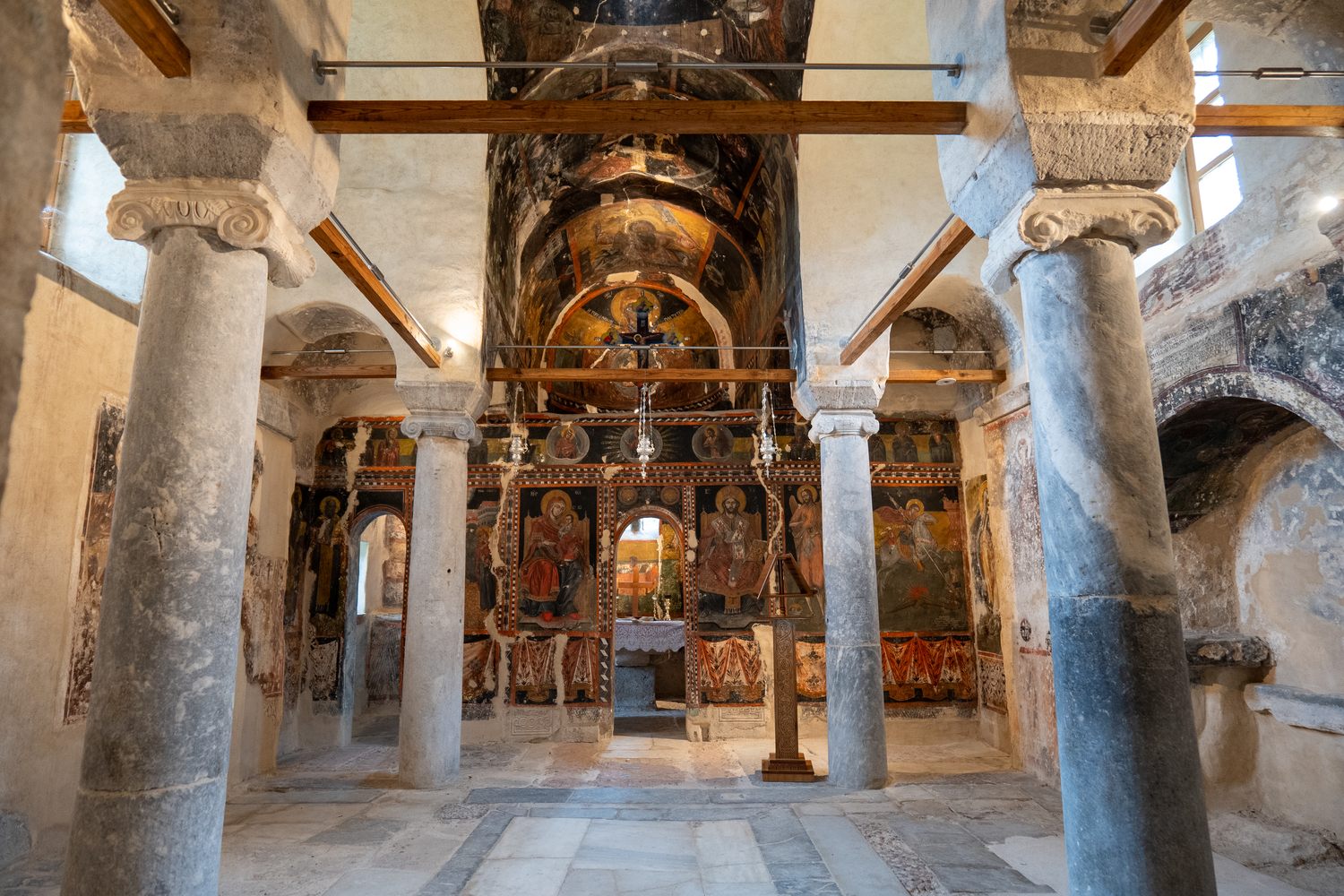
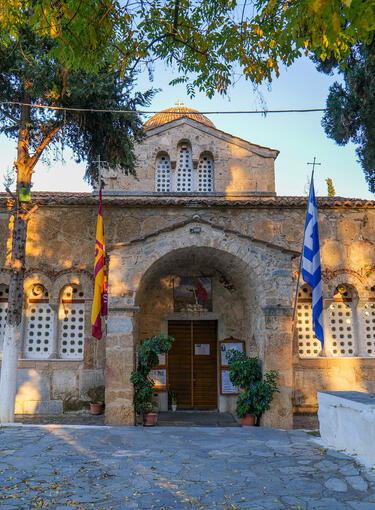
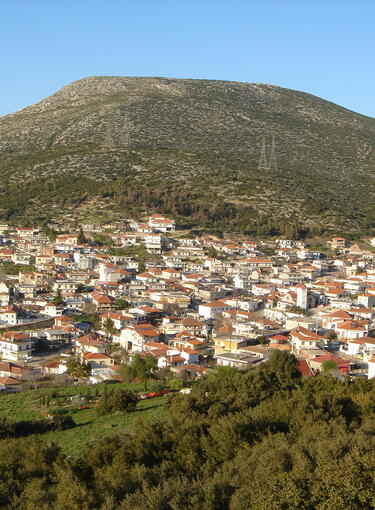
The Church of Saint George is located at the southern edge of the settlement of Akraifnio, at the foothills of the Vigliza or Skopia Hill. This area preserves extensive remains of the ancient acropolis from two construction phases: the 4th century BC and the Hellenistic period. It is believed that the Christian monument was built on the site of the ancient Temple of Dionysus. This theory is supported by the opinion of French archaeologist Maurice Holleaux, who conducted excavations in Ptoon, in 1866. Pausanias, in his Boeotian Descriptions, mentions that during his visit to Akraifnio (175-176 AD), the ancient Temple of Dionysus and its cult statue were still standing.
Numerous ancient architectural fragments and inscribed stones were used as construction material for the building. From the walls of the main church, three marble columns of significant archaeological value, with extensive inscriptions from the Roman period (1st century AD), have been removed and are now housed in the Museum of Thebes. These inscriptions were commissioned by a citizen of ancient Akraiphia, Epaminondas Epaminondou:
a. The first one contains the decree for the Panhellenes diplomatic mission to Rome, to congratulate the new Emperor Gaius Germanicus (Caligula), along with the emperor’s thank you letter to the Greeks.
b. The second includes Nero’s speech in Corinth at the Isthmian Games in 67 AD, granting freedom and tax exemptions to the Greeks, as well as the honors bestowed upon the emperor by the citizens of Akraiphia.
c. The third records Epaminondas’s contributions to his fellow citizens of Akraiphia, the Boeotians, and the Greeks in general.
In addition to the above, many other inscriptions remain embedded in the church walls, providing insights into life in Akraifnio during the 1st century AD. The reason for the church’s construction is also of significant historical interest. After the Latin conquest of Constantinople by the Frankish Crusaders, during the Fourth Crusade (1204 AD), Greece came under Frankish rule. From that time until the early 14th century, Akraifnio (then called Karditsa) and the rest of Boeotia were under the Duchy of Athens.
In early 14th century (1311 AD), Catalan mercenaries, who had been serving the Franks, were ordered to leave Greece. They refused, demanding unpaid wages and permission to settle in the region, claiming they had nowhere else to go and could not return to their homeland. The Franks disagreed and decided to expel them by force. English historian William Miller reports that on March 15, 1311, the Duke of Athens, Walter de Brienne, assembled a force of about 700 French knights, 6,000 cavalrymen, and 3,000 infantry to confront the Catalans in the Copais basin. A Catalan chronicler estimates the total Frankish force at 20,000 soldiers, both infantry and cavalry.
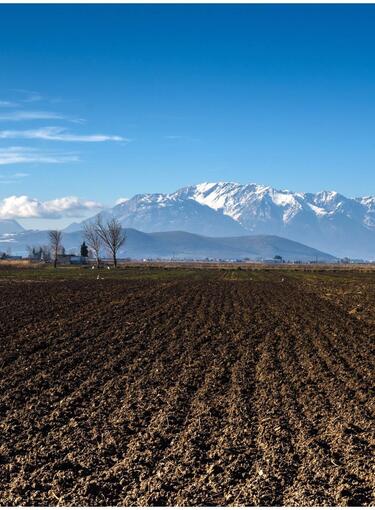
Judging from the way the battle evolved, it appears that the Franks did notadequately study the terrain of the area, especially in March, when the effects of winter had not yet passed. The grass concealed stagnant waters, a detail well-known to the Catalans, who were waiting for the Franks to fall into their trap. The destruction of the Frankish forces was so complete that, according to the orator Theodoulos, "Even a fire-bearer didn’t survive to report the event." Only three Frankish knights survived the massacre at Copais: Boniface de Verona, Roger Deslaur, and Anthony de Flama, lord of Karditsa (Akraifnio).
One account suggests that during the battle, De Flama made a vow to Saint George (the patron saint of soldiers, celebrated by both Orthodox and Catholic Christians). If he survived, he promised to build a church in his honor. Thus, fulfilling this vow, he built the Church of Saint George in Akraifnio. Regardless of the founder's motivation (who is likely buried in the arcosolium - arched cell grave- of the southern wall), the main point here is that a Flemish patron financed the construction of a building that fully adhered to Byzantine
architectural styles. This fact eloquently reveals the gradual cultural merging between the different populations in the Greek regions, under Western rule after 1204.
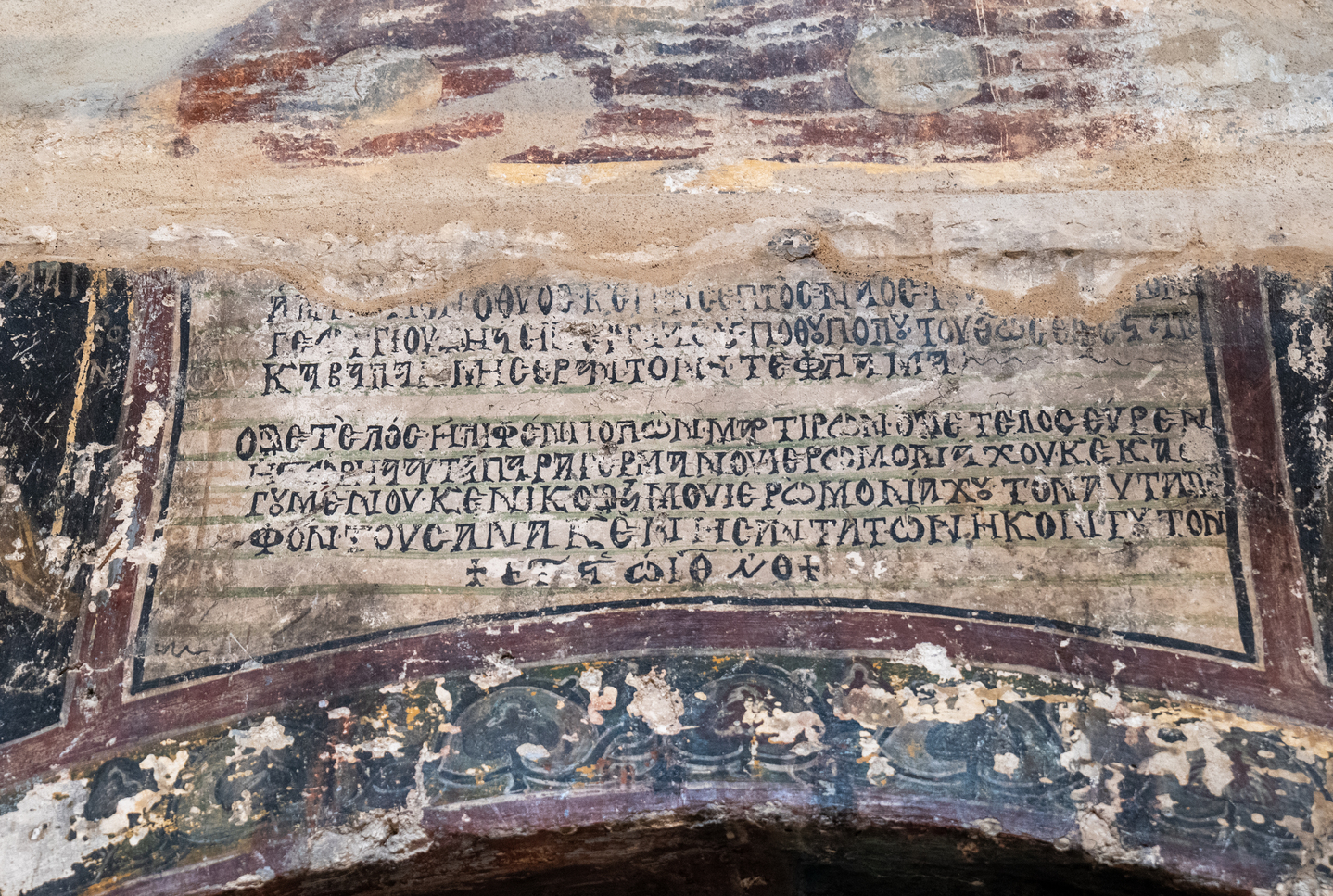
The dedicatory inscription, preserved to this day inside the church, is engraved on the facade of the arcosolium, in the center of the southern wall. Despite containing several spelling errors, it reads as follows: "The holy and most venerable church of the great martyr Saint George was erected through the efforts and deep devotion of the most pious knight, Sir Anthony de Flama. At the end of many trials, here he found his rest. This was decorated by the hieromonk and abbot Germanos and the hieromonk Nikodimos, brothers who renovated this house: Year 6819, indiction 9."
The date corresponds to the ninth month of 1311 AD, meaning that six months after the deadly Battle of Copais, Anthony de Flama fulfilled his vow. From the inscription, it can also be inferred that the building was part of a monastery—likely serving as the Catholikon (main church)— since the hieromonk and abbot Germanos and the hieromonk Nikodimos are mentioned as renovators, although their true relationship with the founder, Anthony de Flama, is unclear.
In April 1841, the French traveler and writer Buchon visited Akraifnio and was the first to document the dedicatory inscription. In the late 1990s, a group of Akraifnio residents, represented by the local cultural association, collaborated with the village's church committee to fund a restoration study for the church. The restoration study was submitted to the local Ephorate of Antiquities, approved in 2004, and was included in a funding program in 2010. Implementation began in late 2010. The church's reopening ceremony was held on April 23, 2016, by the Boeotia Ephorate of Antiquities, in collaboration with the Holy Metropolis of Thebes and Levadea and the Municipality of Orchomenus. This event marked the completion of the monument's restoration, carried out by the Ephorate of Antiquities of Euboea (formerly the 23rd Ephorate of Byzantine Antiquities), with funding from the 2007–2013 NSRF (Regional Operational Program for Thessaly, Central Greece, and Epirus).