Byzantine Monuments and Monasteries
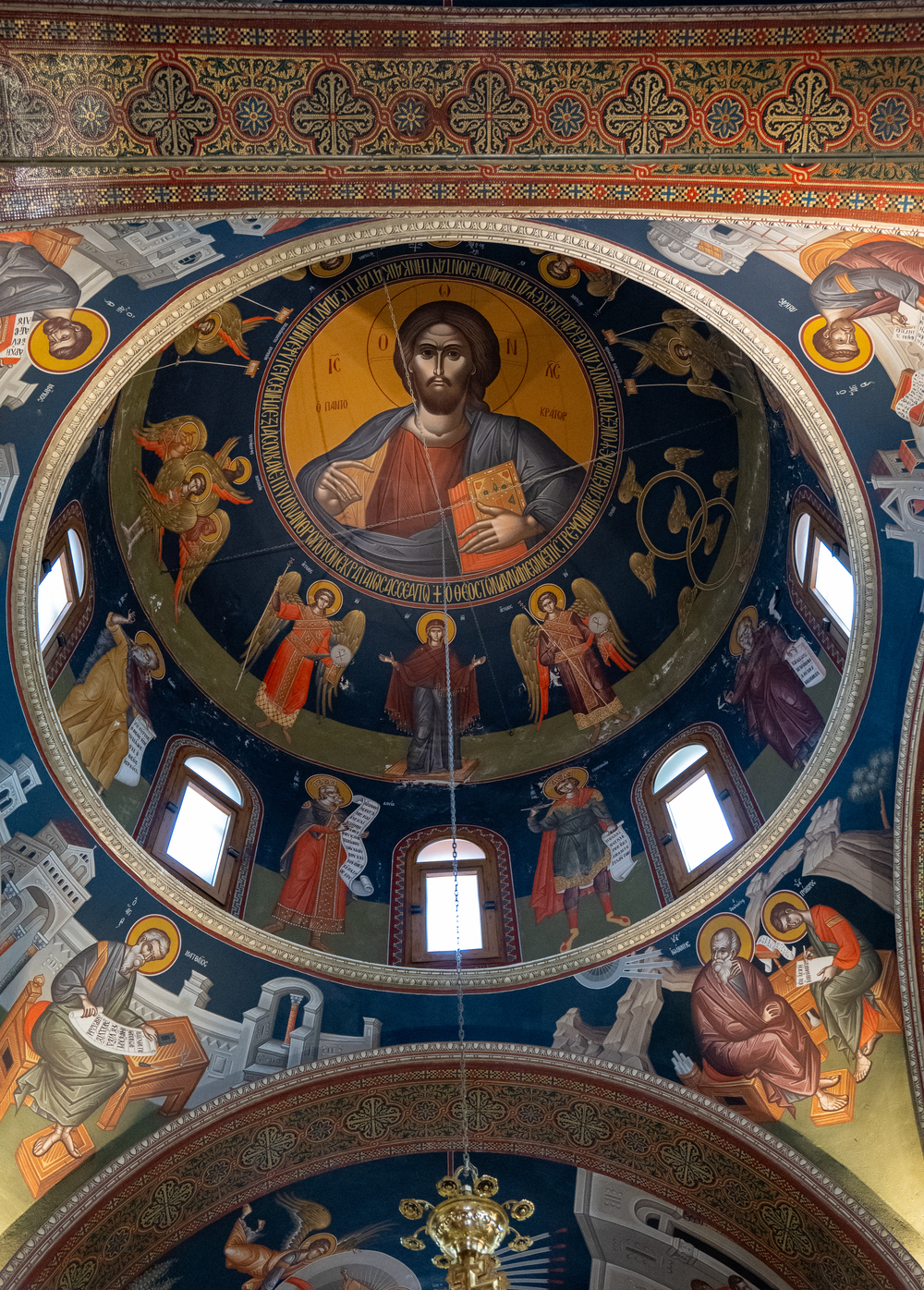
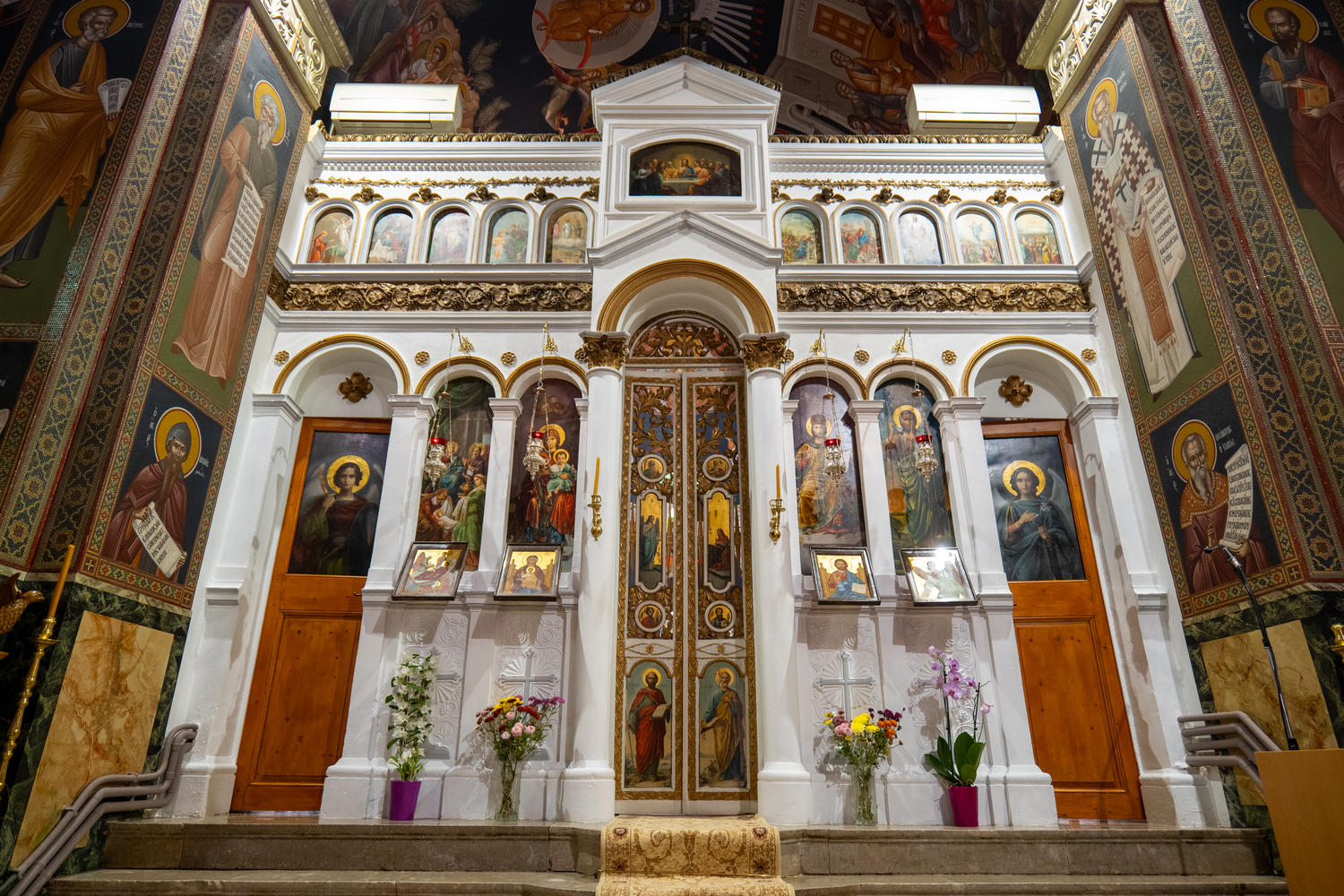
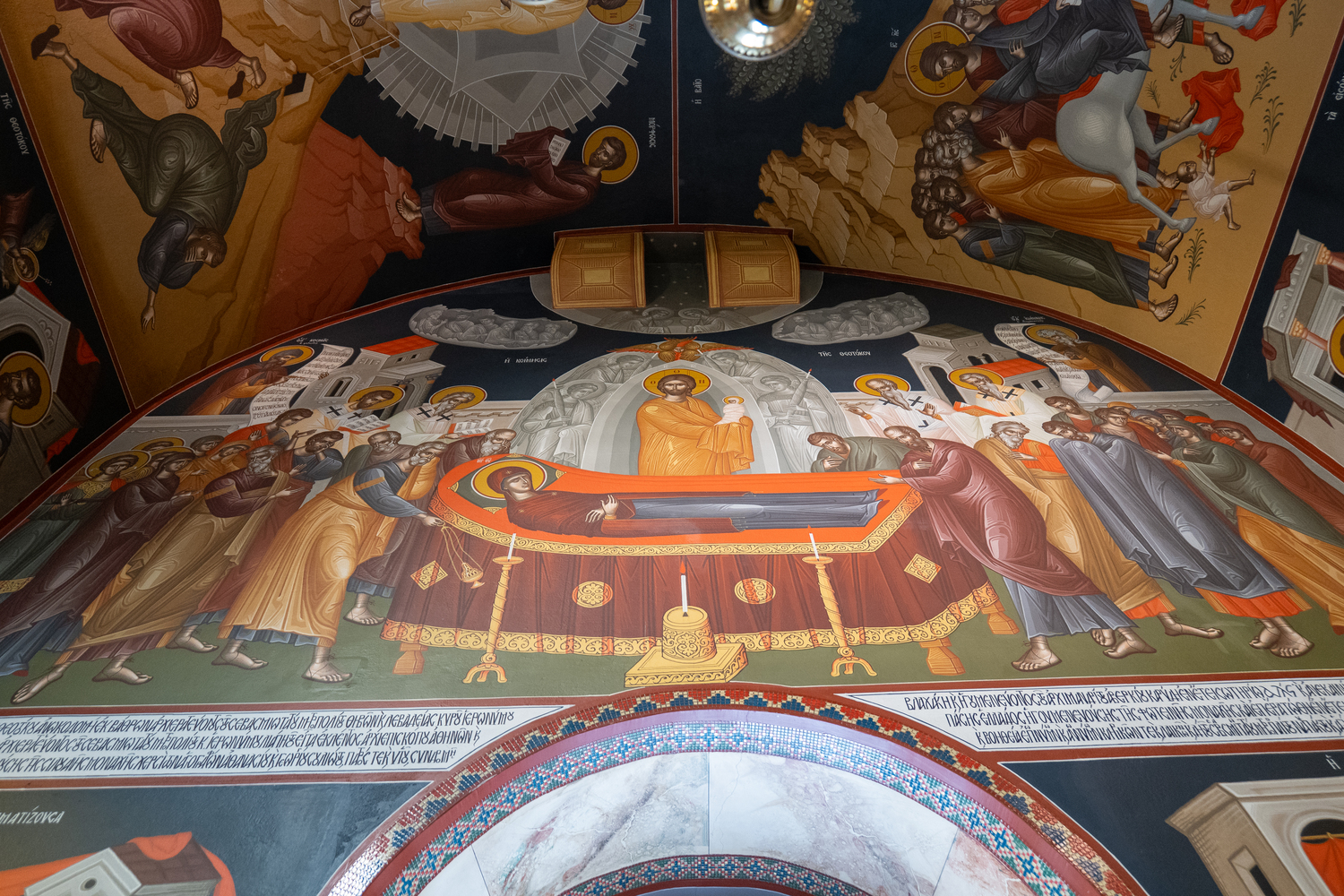
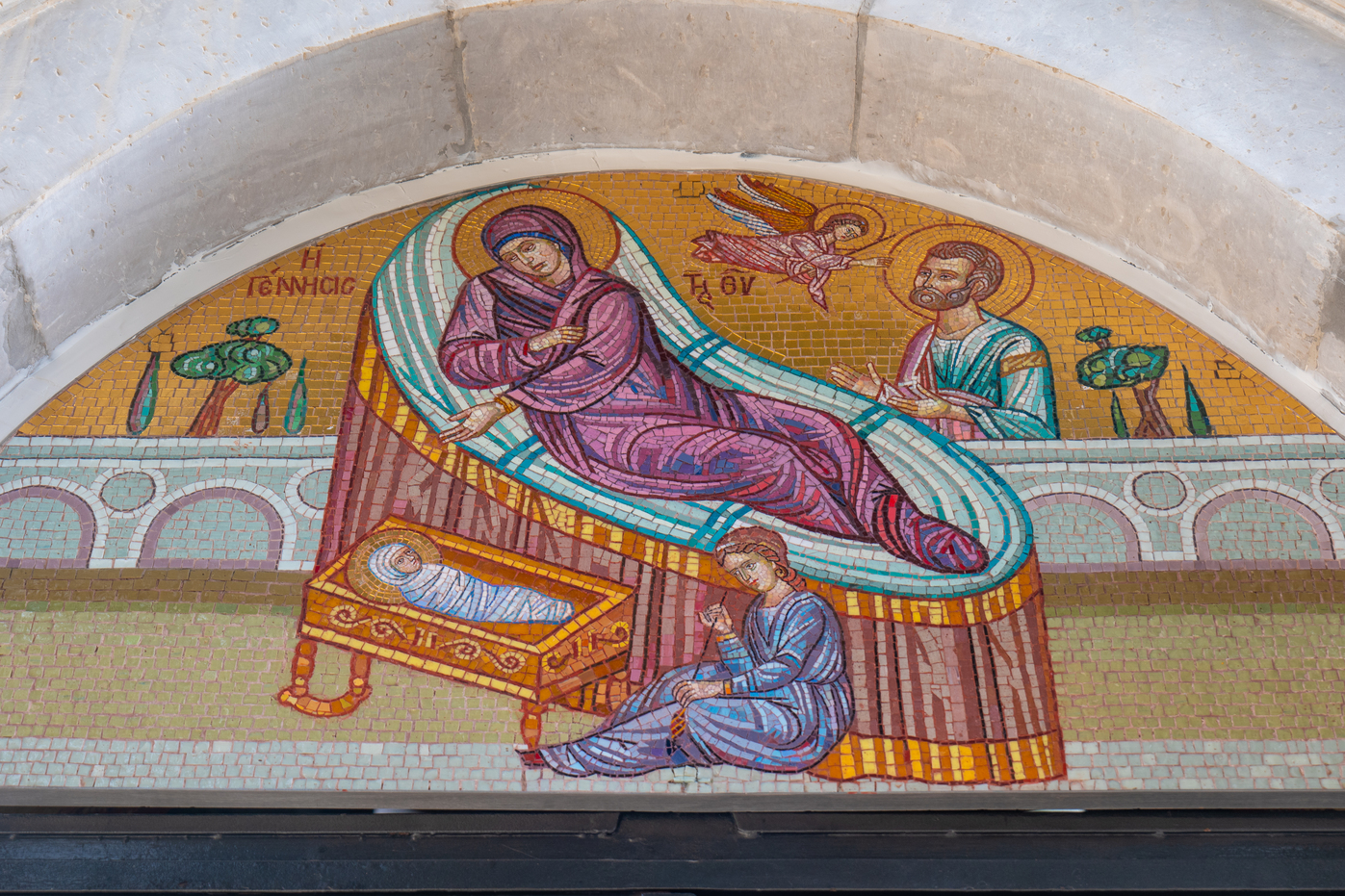
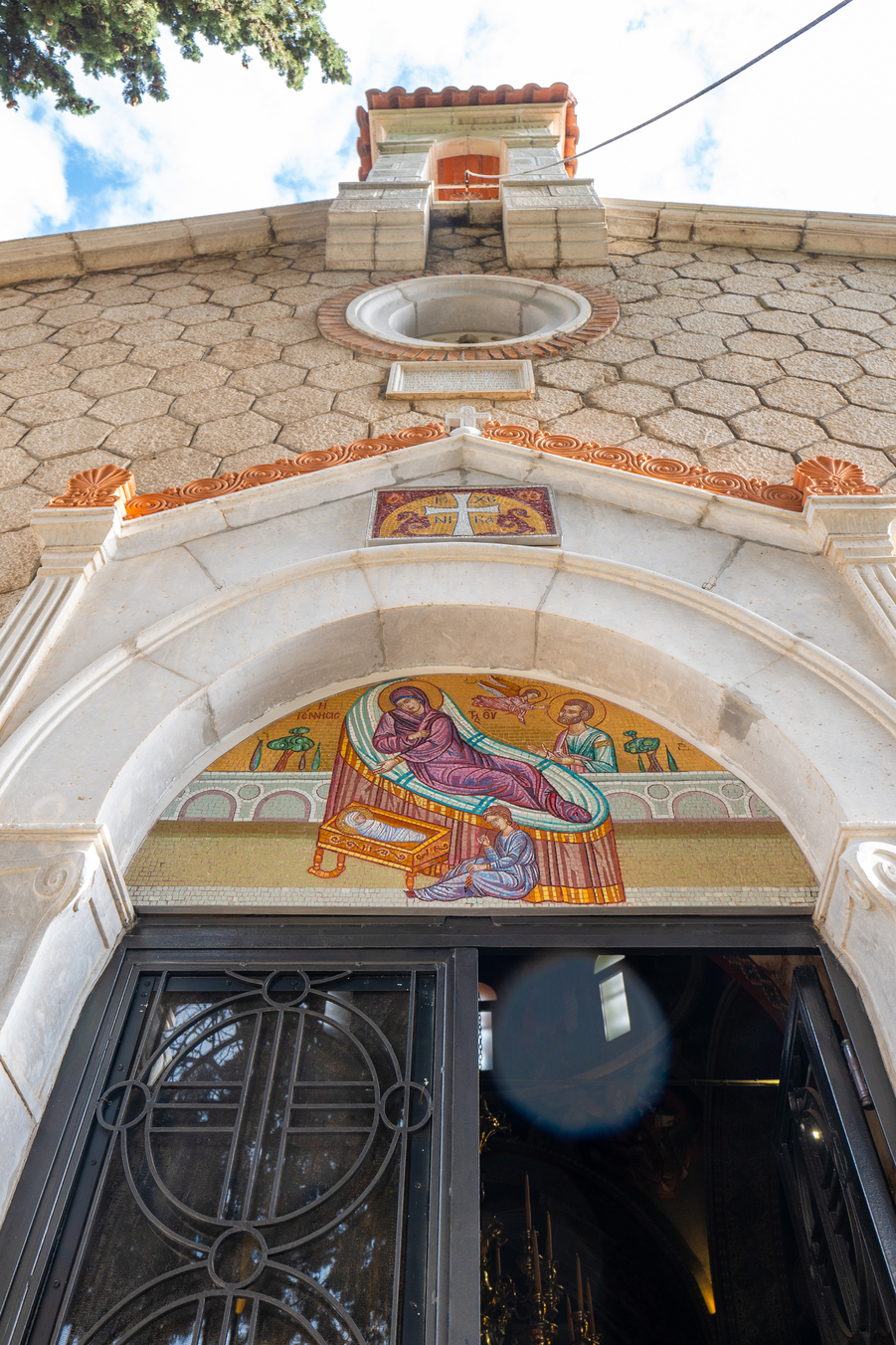
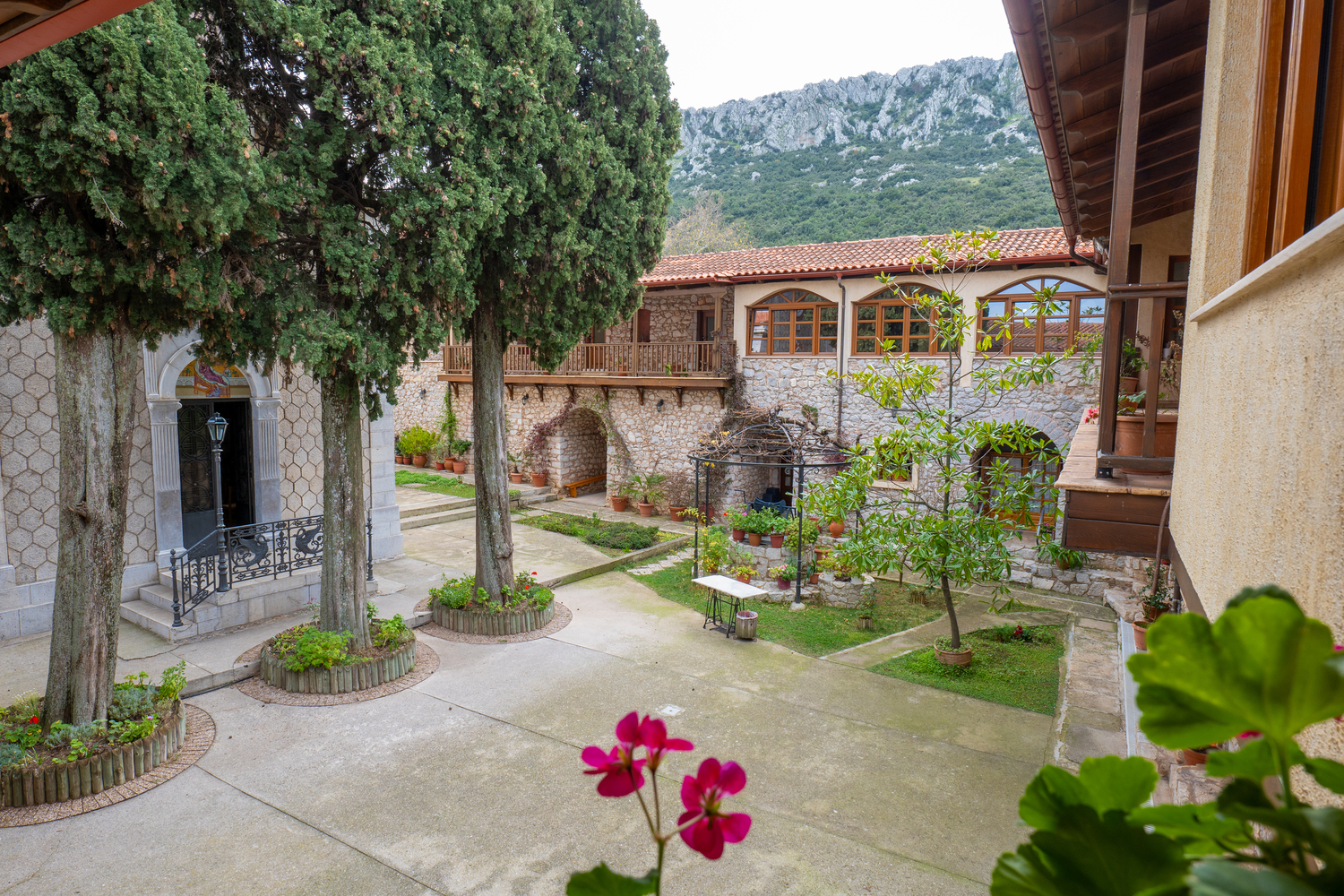
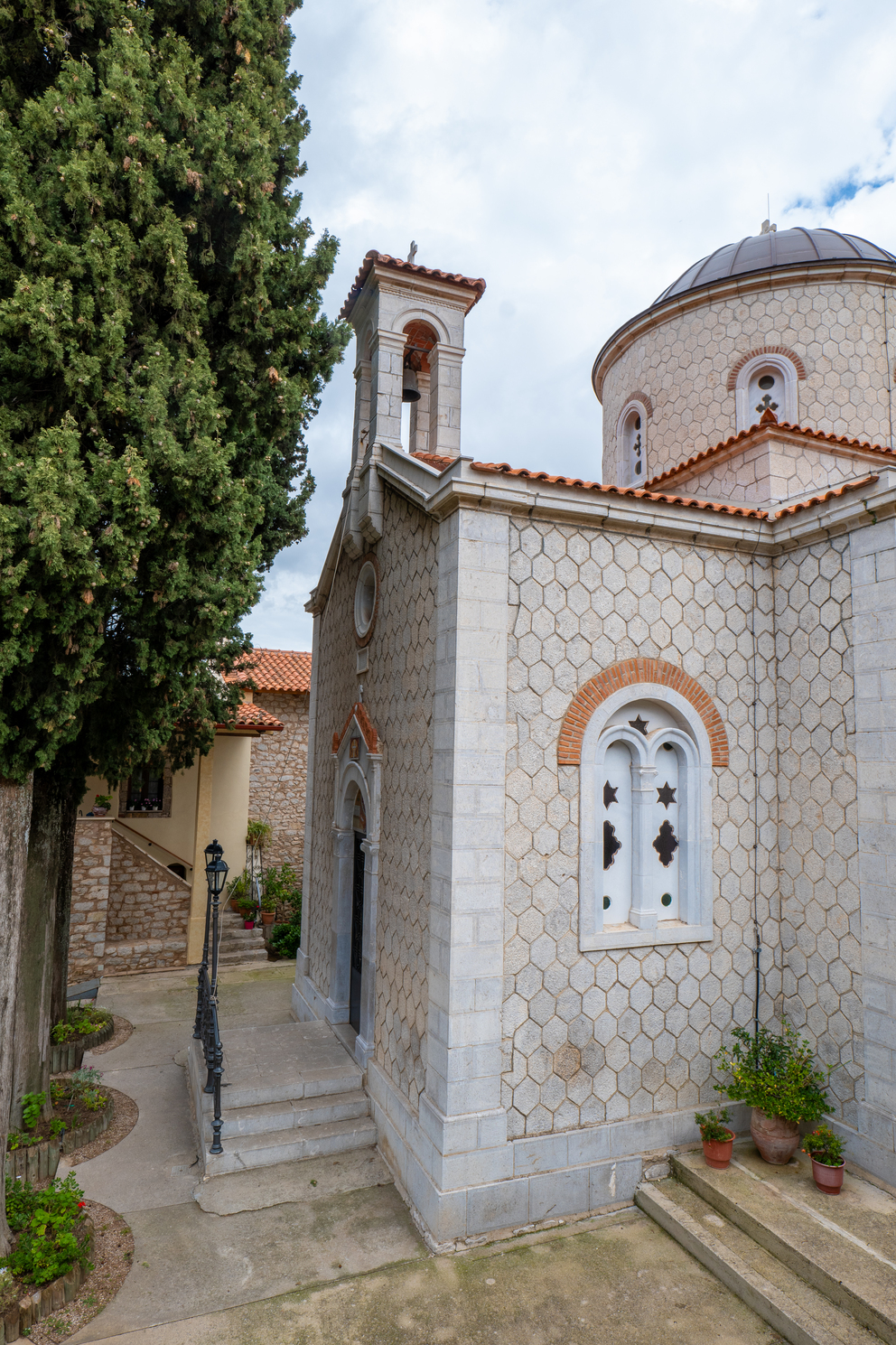
Τhe Holy Monastery of the Nativity of the Virgin Mary, known in the region of Boeotia as the Monastery of Pelagia, is situated on Mount Ptoon, at an altitude of 551 meters. Its exact location is 6.5 km from the 103rd kilometer of the Athens-Lamia National Road and 4.5 km from Akraifnio. It lies approximately one kilometer from the Perdikovrysi site, where the ruins of the sanctuary of Ptoos Apollo are located. Documents from 1837 and 1843 in the State Archives (File 38) refer to it as the "Holy Monastery of the Nativity of the
Virgin Mary, also called Pelagia."
Definitive historical evidence, such as inscriptions, frescoes, or written records has not been found. All available information comes from oral tradition, which presents many versions about the time of its founding, its founder, and its name.
Karditsa and the Monastery of Pelagia participated in the Greek War of Independence in 1821, and the area was a site of clashes between Odysseas Androutsos and Ottoman commanders Omer Vryonis and Kiose Mehmed. On January 29, 1829, the decisive Battle of Martino took place nearby, where Demetrios Ypsilantis defeated Mahmud's army. In 1835, Karditsa became the seat of the municipality bearing its name.
Tradition vaguely suggests that the monastery was built during early Christian times, while others date it to the 7th century AD. Considering that the sanctuary of Ptoos Apollo was still active until the end of the 1st century AD and that Christianity had not yet spread to the region when Pausanias visited Akraifnio in 175 AD, it is likely that the monastery was founded in the 7th century or later.
After the conquest and looting of Thebes by the Normans during the Second Crusade, Saint John Kaloktenes became the Metropolitan of Thebes (April 29, 1147 AD). Although there is no concrete evidence, his extensive charitable activities, which included founding monasteries, hospitals, and shelters, suggest that he may have built the monastery on a pre-existing chapel. He also made it a dependency of the Sagmata Monastery, so as to be closer to Sagmata's properties in the Skroponeria area.
However, others argue that the monastery was founded in the 16th–17th century, two centuries after the fall of Constantinople, a period marked by a significant increase in monasteries across Greece. Architectural features of the monastery's masonry, such as the thickness, mortar, and construction quality of the lower floors of its wings, suggest it may date to the 12th century.
Antonios Vasiliou, author of the book Pelagia, has compiled various oral accounts about the monastery's name. One account suggests that an unknown individual, associated to the sea and risky journeys, built the monastery to gain the favor of the Saint of the Sea
(Pelagos).
Another tradition holds that the monastery was named after a Roman woman, Pelagia, who converted to Christianity, sought refuge there, and built a small chapel. She once was travelling with locals, and during a severe storm that threatened to sink their ship, Pelagia fell to her knees and prayed for calm seas, which miraculously occurred. Her companions converted to Christianity, and they built a chapel dedicated to the Nativity of the Virgin Mary at the site where Pelagia practiced asceticism. Pelagia earned great admiration and love from the locals, and the monastery became known as the Monastery of Pelagia.
According to another account, the area where the monastery now stands was once a lake. The Virgin Mary appeared to local shepherds and instructed them to retrieve Her icon from the lakebed. When they found the icon, the church built at the site was named "Pelagia" (of the Sea), as the icon was found in the lake waters.
Some believe the monastery was named Monastery of Pelagia to emphasize the "sea of love" (pelagos meaning "sea") with which the Mother of God embraces devout Christians. In his book History of Thebes, G. Tsevas notes that some locals think the monastery's name derives from its location on the slope (plagia) of the mountain. This interpretation is supported by the fact that many locals still refer to the monastery as Plagia instead of Pelagia.
The name Pelagia may also serve to distinguish this monastery from other monasteries in Boeotia dedicated to the Virgin Mary, such as the Monasteries of Evangelistria, Jerusalem, Makariotissa, and Skripou.
However, the name Pelagia appears unrelated to the well-known Saint Pelagia. If the monastery’s main church were dedicated to one of these Pelagia saints—such as Saint Pelagia of Tinos (celebrated July 23), the virgin Saint Pelagia (October 8), or th veneration e martyr Saint Pelagia (May 4)—the monastery would celebrate on one of these feast days instead of the Nativity of the Virgin Mary on September 8. It is noteworthy that nearby villages Akraifnio and Kokkinos celebrate the same day, and women named Pelagia traditionally celebrate their name day on September 8, the feast of the Virgin Mary.
The monastery played an important role during the Greek War of Independence in 1821. At the time, it had over 50 monks and actively
supported the military operations of Ypsilantis and Androutsos. During these years, the abbot was Hieromonk Anthimos Georgiou from Mouriki (1799–1843). After the establishment of the Greek state, when the Bavarian administration closed over 400 monasteries by decree in 1833, the Monastery of Pelagia was deemed worthy of preservation, as noted in State Archives documents.
In the 1837 census, the monastery was recorded as having seven monks and seven servants. Records also show the presence of monks dating back to 1786. The monastery’s boundaries were described as barren lands extending for 2 hours and 30 minutes of walking in every direction. Dependencies included properties in Seggena, near Lake Yliki, with a chapel dedicated to the Archangels, in Skroponeria, with a chapel of Saint Nicholas, Larymna, which included a chapel of Saint Nicholas, a house and a watermill and a
dependency in Martino.
On July 20, 1868, when Ieronymos was the abbot, Averkius Karydis arrived at the monastery. Four years later, on August 24, 1872, Averkius became abbot.
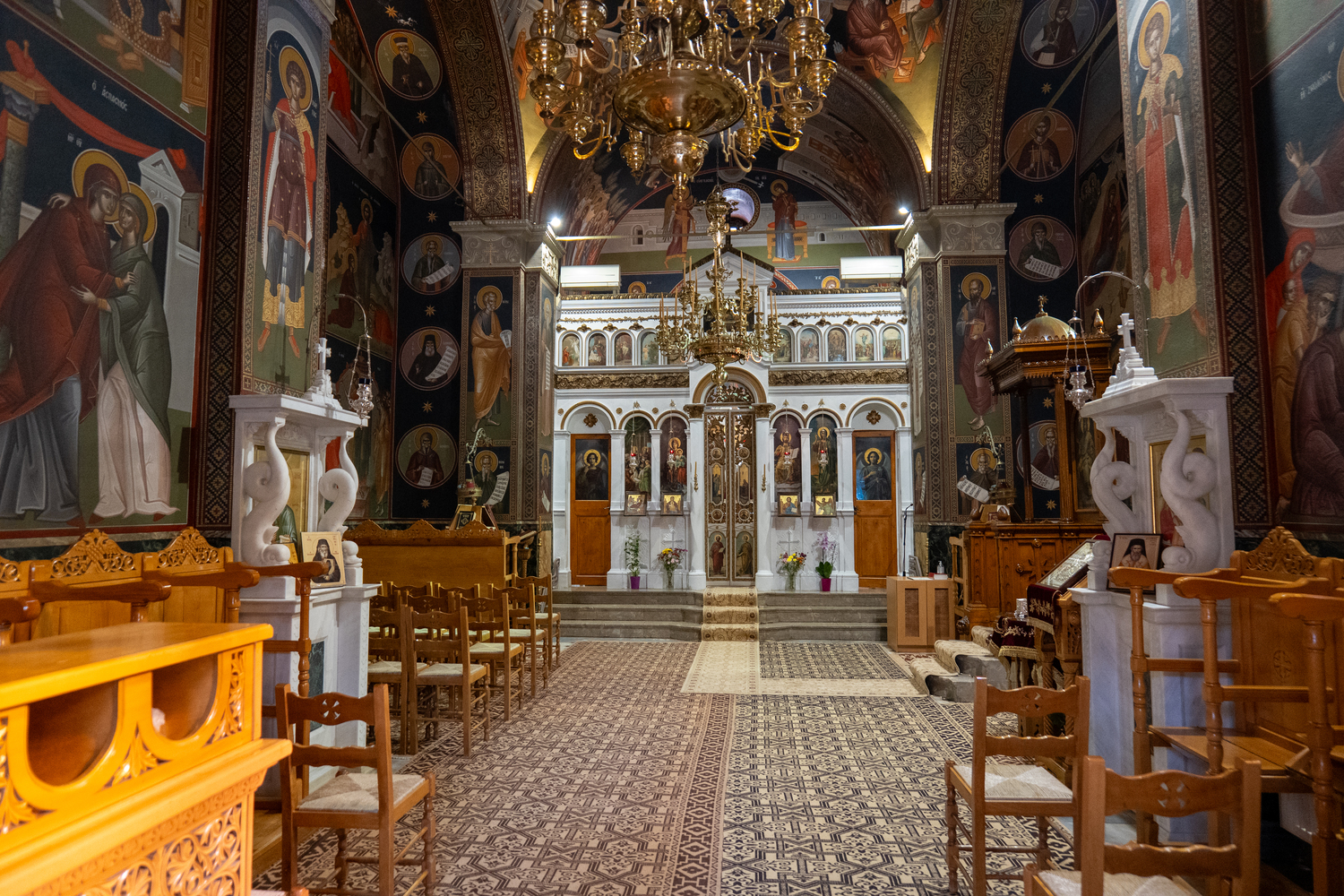
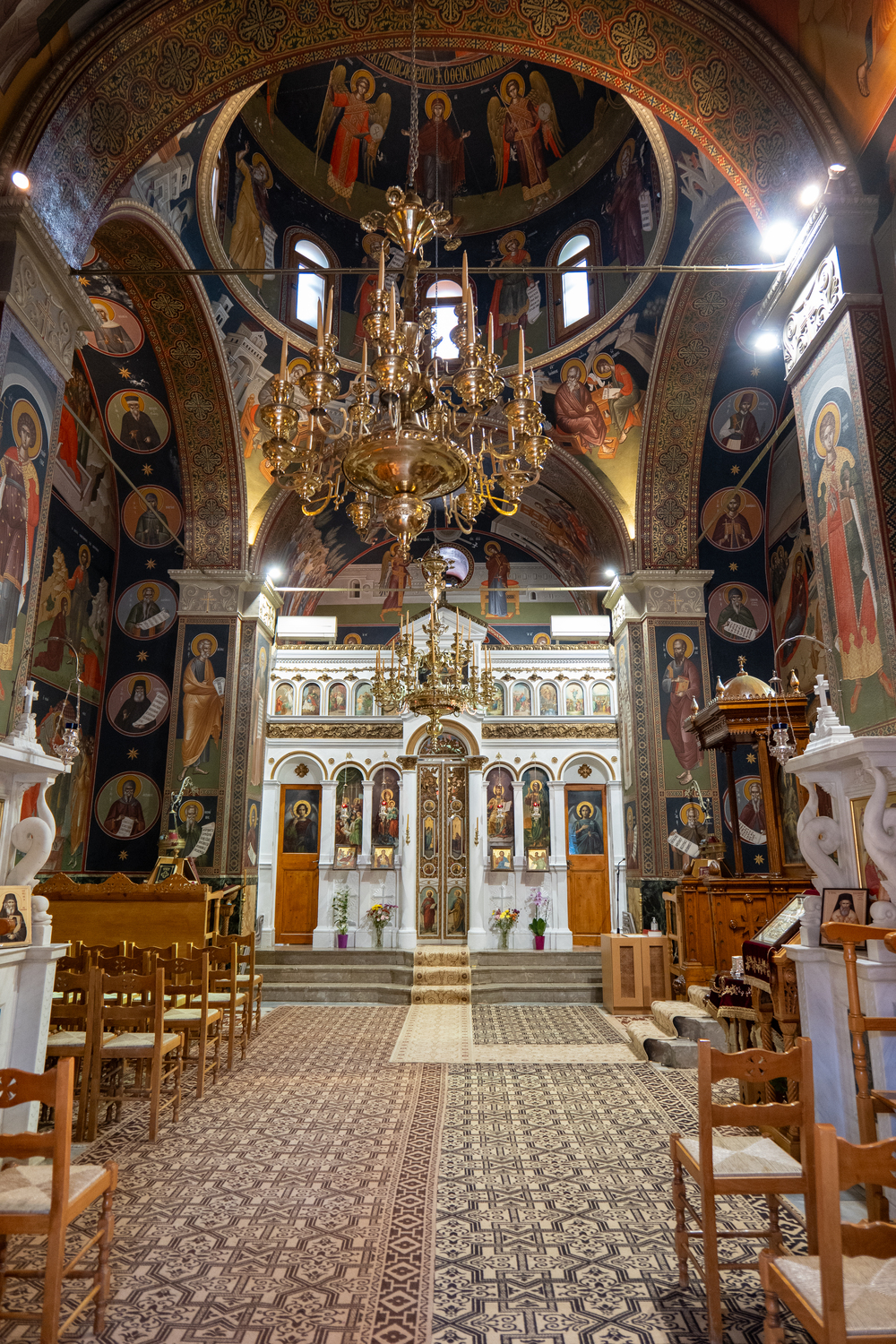
Under his leadership, the monastery flourished, reaching sixty monks. In 1899, with the support of Boeotia Metropolitan Ieronymos Vlachakis, Averkius began renovating the monastery. He rebuilt the main church (Catholikon) from its foundations, after it had been destroyed by an earthquake or fire, as well as the monk cells in the south wing and the Abbot’s quarters. Completed in 1906, the new church is an imposing cruciform structure built with finely cut six-sided stones, dedicated to the Nativity of the Virgin Mary. Additionally,
Averkius established an olive press in Skroponeria and a flour mill in Larymna, making the monastery independent from the Sagmata Monastery.
After Averkius’s death in 1913, the monastery began to decline. By 1928, only three monks remained, led by Averkius’s nephew, Nikiforos. In 1935, a royal decree turned the monastery back into a dependency again of the Sagmata
Monastery.
In 1936, the magazine Ypaithros mentioned that a monk named Nikodimos from the Sagmata Monastery was assigned to oversee the Monastery of Pelagia. By 1940, according to witnesses A. and T. Notton, only one monk was living there—possibly Nikodimos.
During the following decades, until 1968, the monastery had no permanent residents and fell into complete neglect. The church held service only once a year for the feast day celebrated by the villages of Akraifnio and Kokkinos. Occasionally, individual worshippers opened the church.
In the summers, many residents from Akraifnio and Kokkinos camp in the monastery grounds and vacation there. Some use the monastery’s cells for lodging, thus bringing life back to the site, keeping it clean and often performing minor repairs to the roofs and windows to prevent leaks.
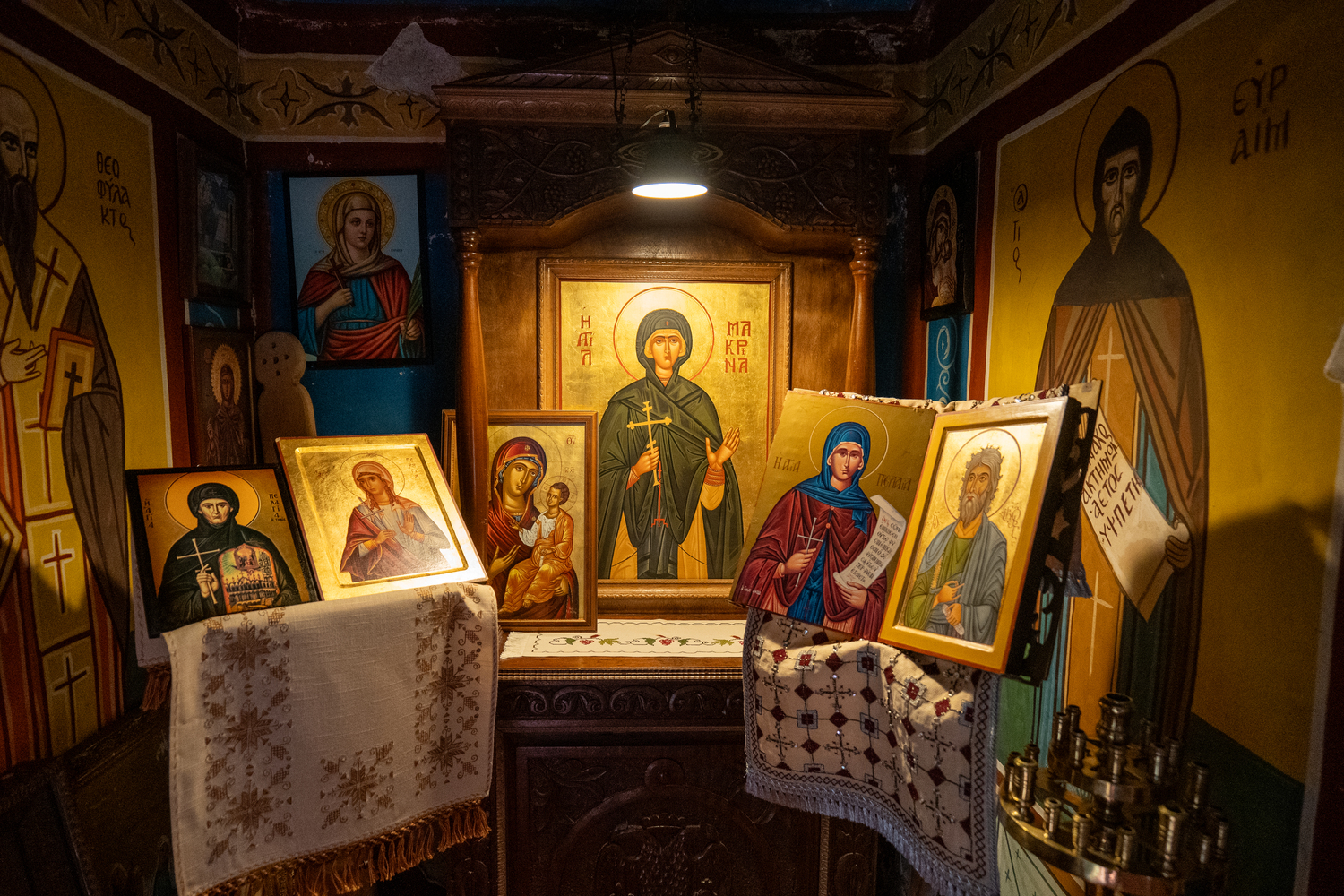
In July 1968, Elder Makrina Tsiropoula (+2004) from Livadea arrived at the monastery. With the support of the then-Metropolitan of Thebes and Livadeia, Nikodimos (1967–1981), and the Mother Superior Anthousa of the Holy Monastery of Evangelistria, as well as the unwavering assistance of the residents of Akraifnio and Kokkinos, she initiated a major effort to restore the almost ruined monastery. With incredible determination and courage—rare for a woman living completely alone in an isolated environment far from any inhabited area—and relying solely on her faith in God, she remained there for 19 years, renovating a large part of the ruins.
She built the chapel of Saint Alexios as a burial ground, converted a barn into a chapel dedicated to the Holy Martyr Pelagia (commemorated on May 4, so that people could venerate a Saint Pelagia), and arranged for telephone installation, road construction, and other improvements.
In July 1987, a new sisterhood, composed of several young and educated nuns, settled in the monastery under the abbess Fotini Demou († December 10, 2007), with the blessings of the former Metropolitan of Thebes and Livadeia and now Archbishop of Athens and All Greece, Ieronymos, with the consent of Elder Makrina. The new sisterhood continued the restoration and revival of the monastery.
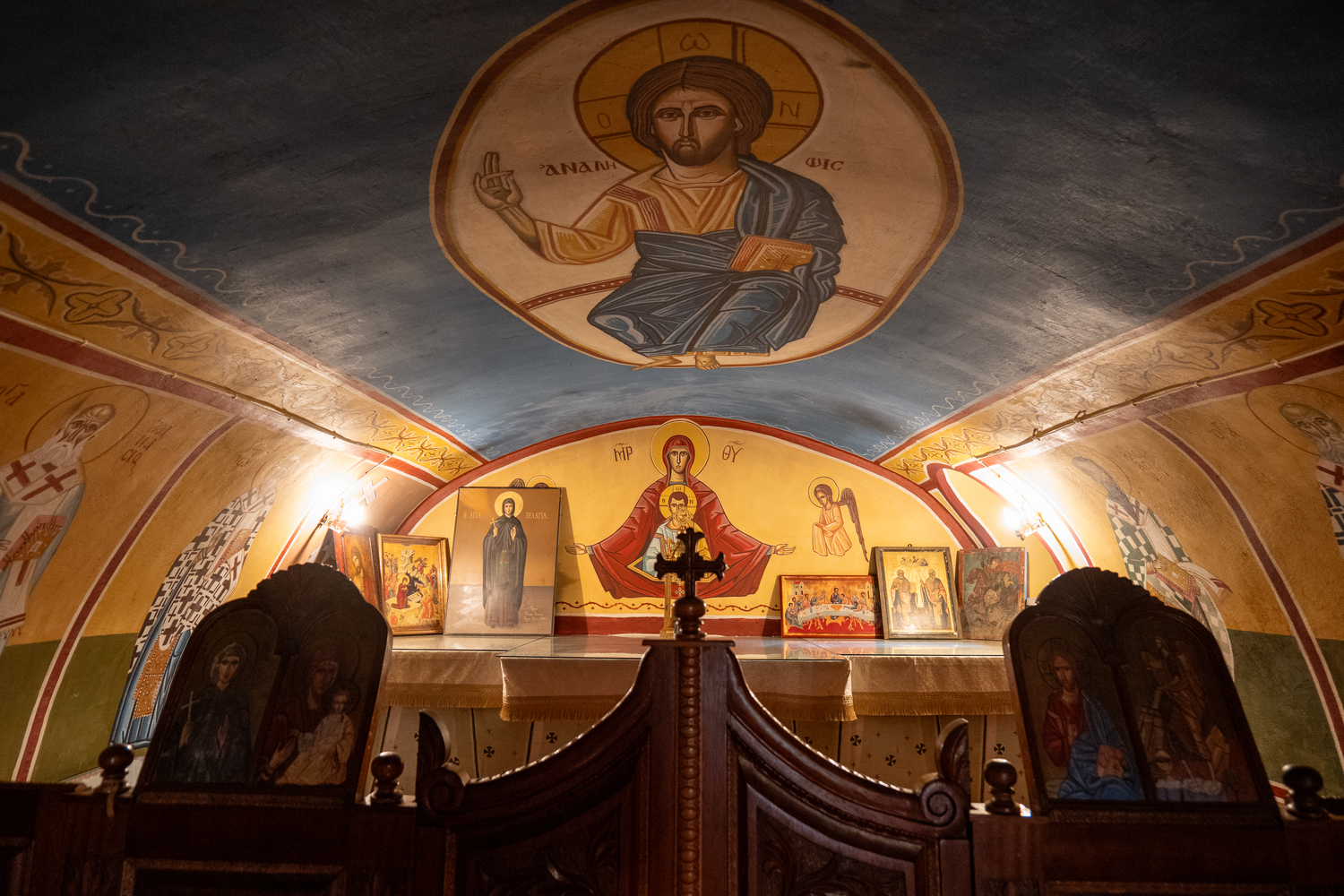
The eastern wing was completed, including an internal chapel dedicated to Saint Gregory Palamas, infrastructure work was carried out in the courtyard, and new spaces and buildings were created. The monastery was connected to electricity and water supply, a new road was opened, the northern wing was renovated, and the main church (Catholikon) was decorated with frescoes. After many renovations to both the interior and exterior, the monastery today is an impressively majestic structure.
Today, several nuns reside in the Monastery of the Nativity of the Virgin Mary (Pelagia), under the abbess Silouani. They strive to continue the Orthodox tradition through a life of quiet contemplation and also engage in activities such as gold embroidery and publishing the works of the monastery’s spiritual leader, Metropolitan Hierotheos of Nafpaktos and Agios Vlasios (secular
name: Georgios Vlachos).