Byzantine Monuments and Monasteries
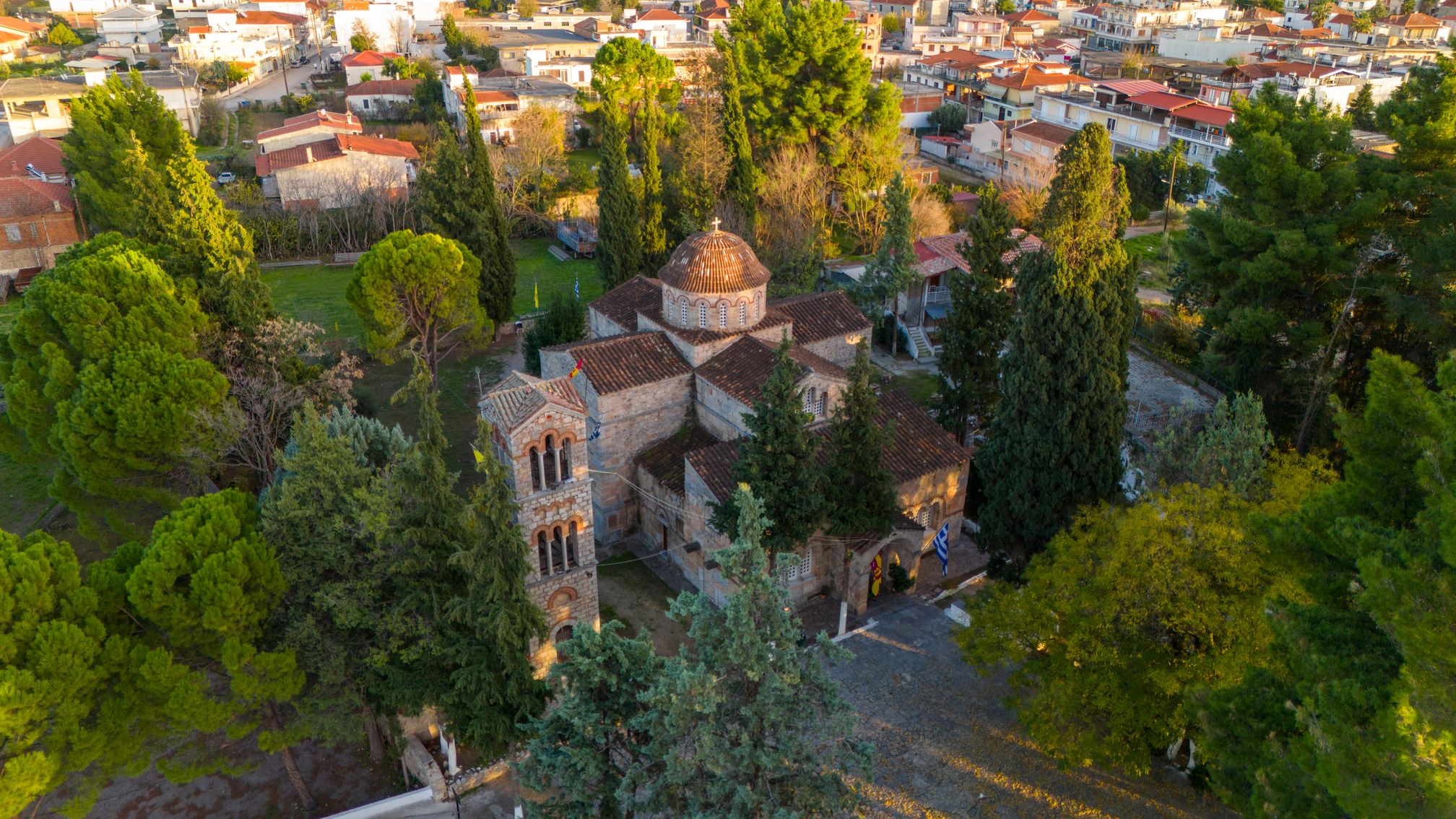
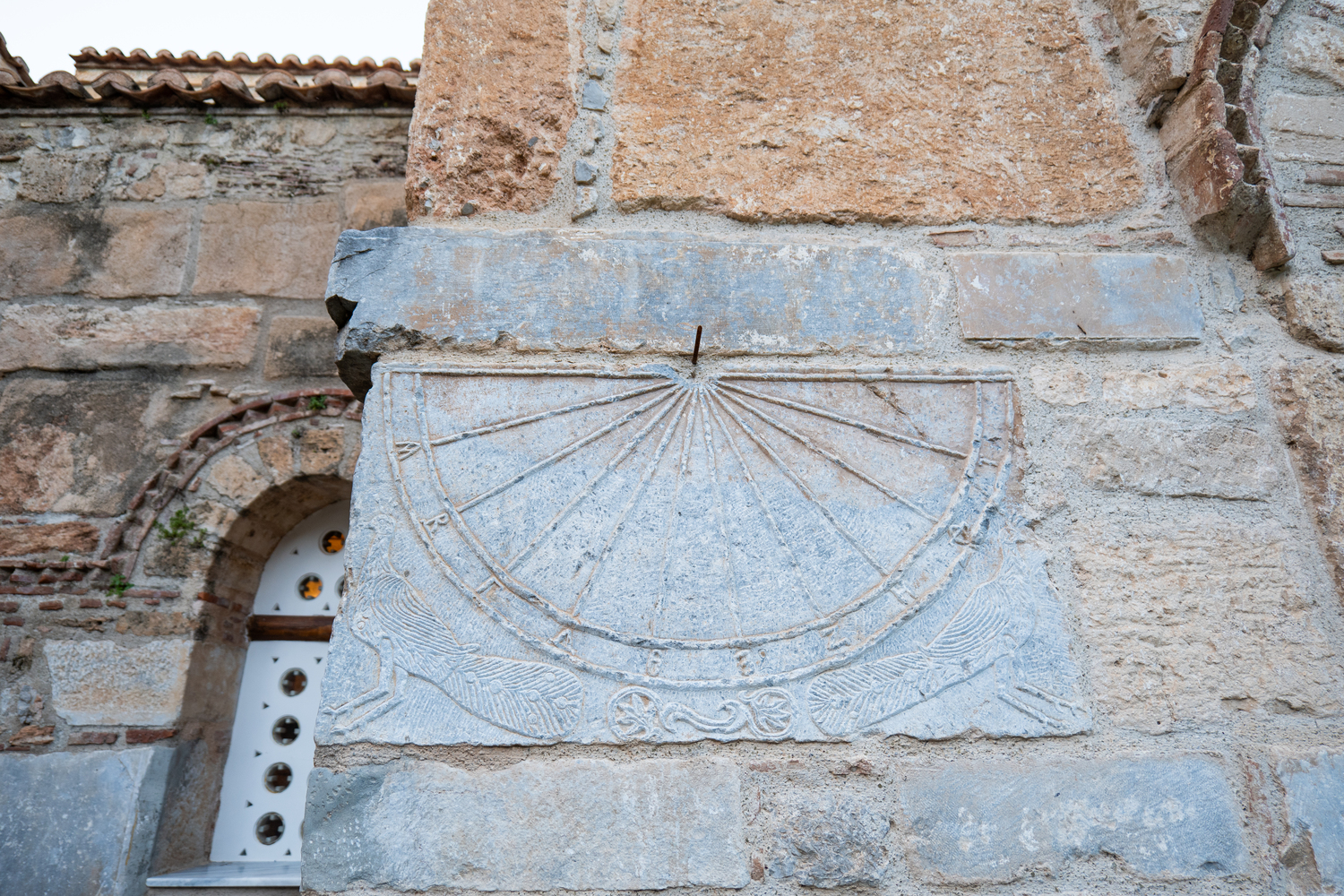
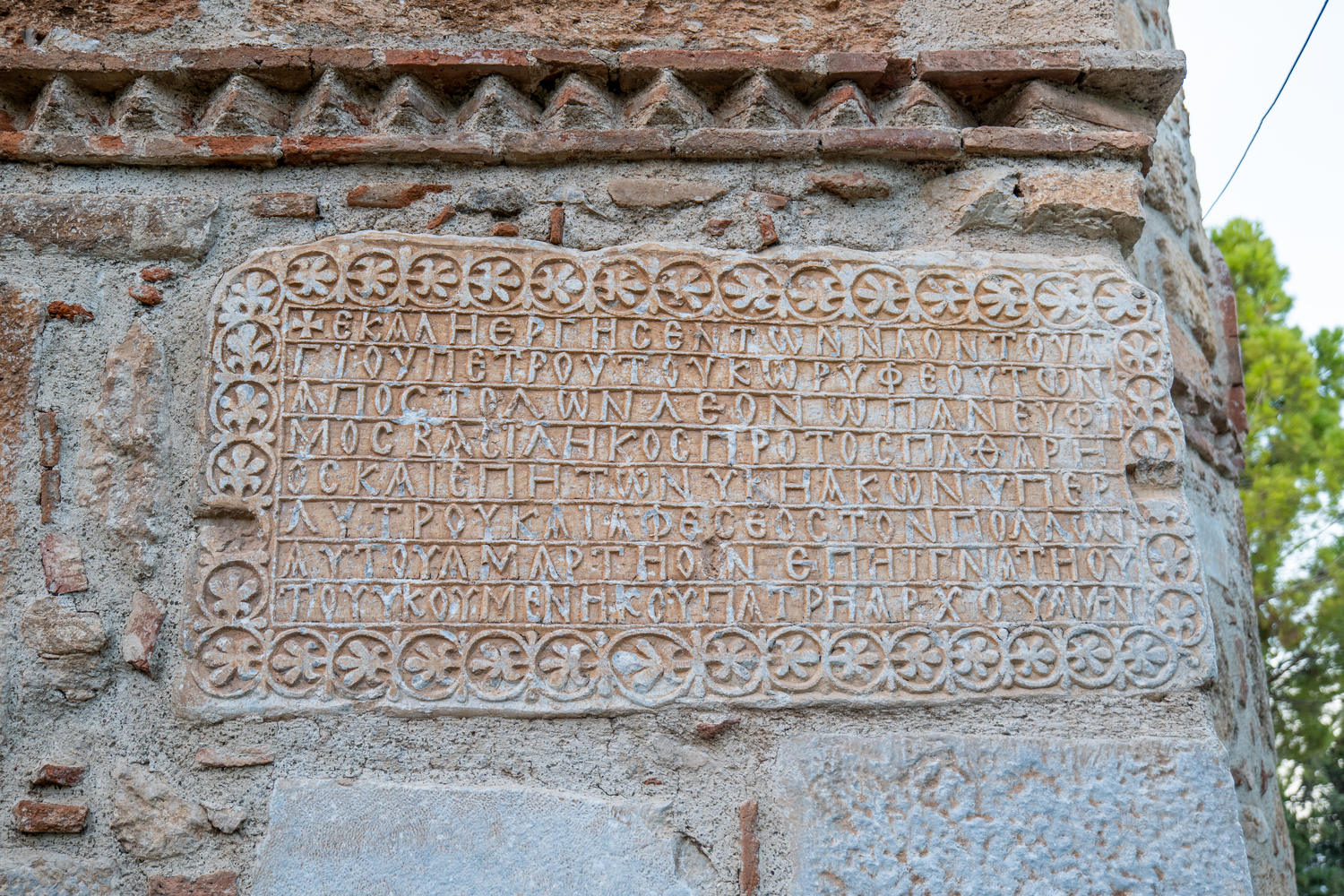
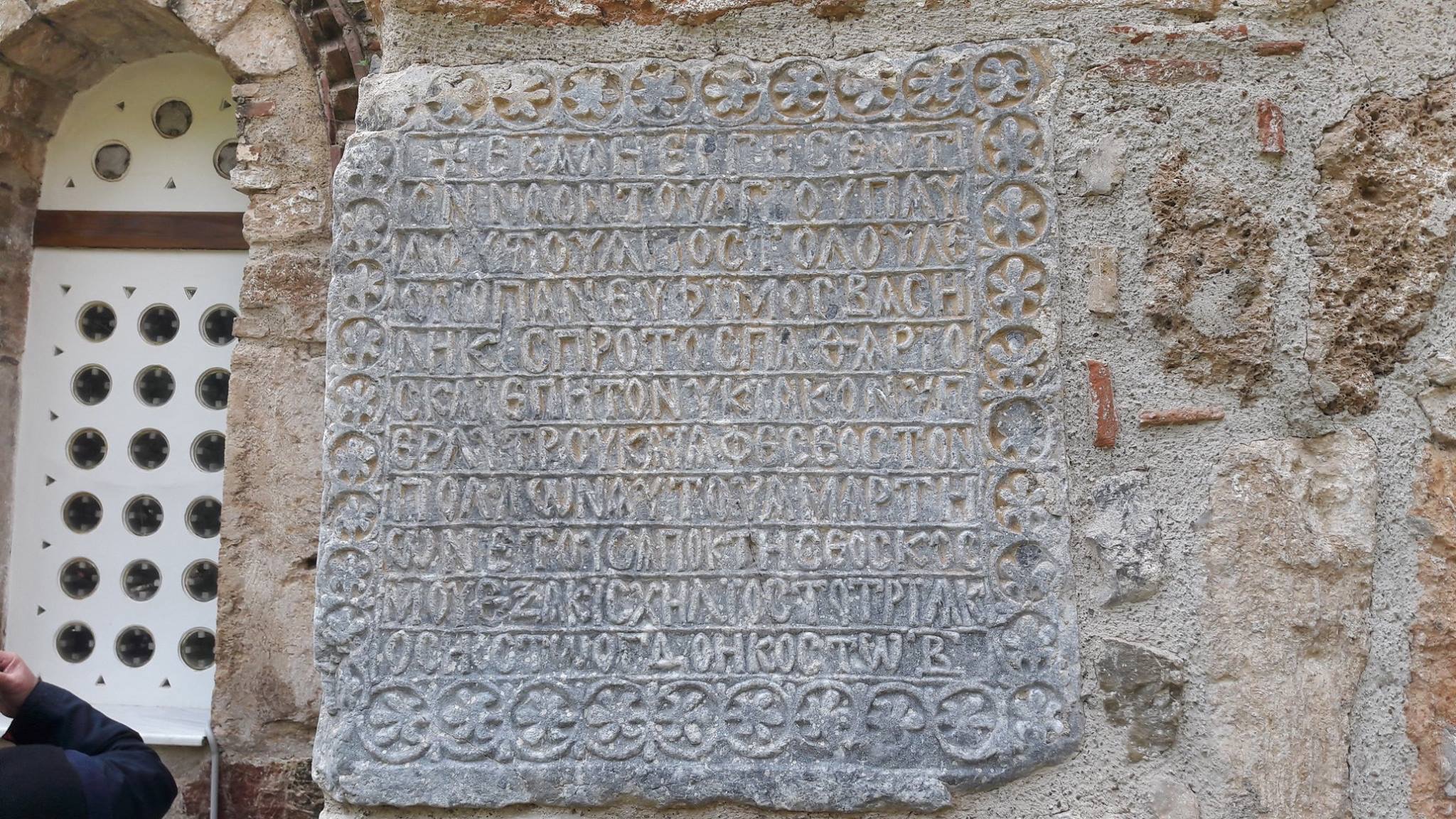
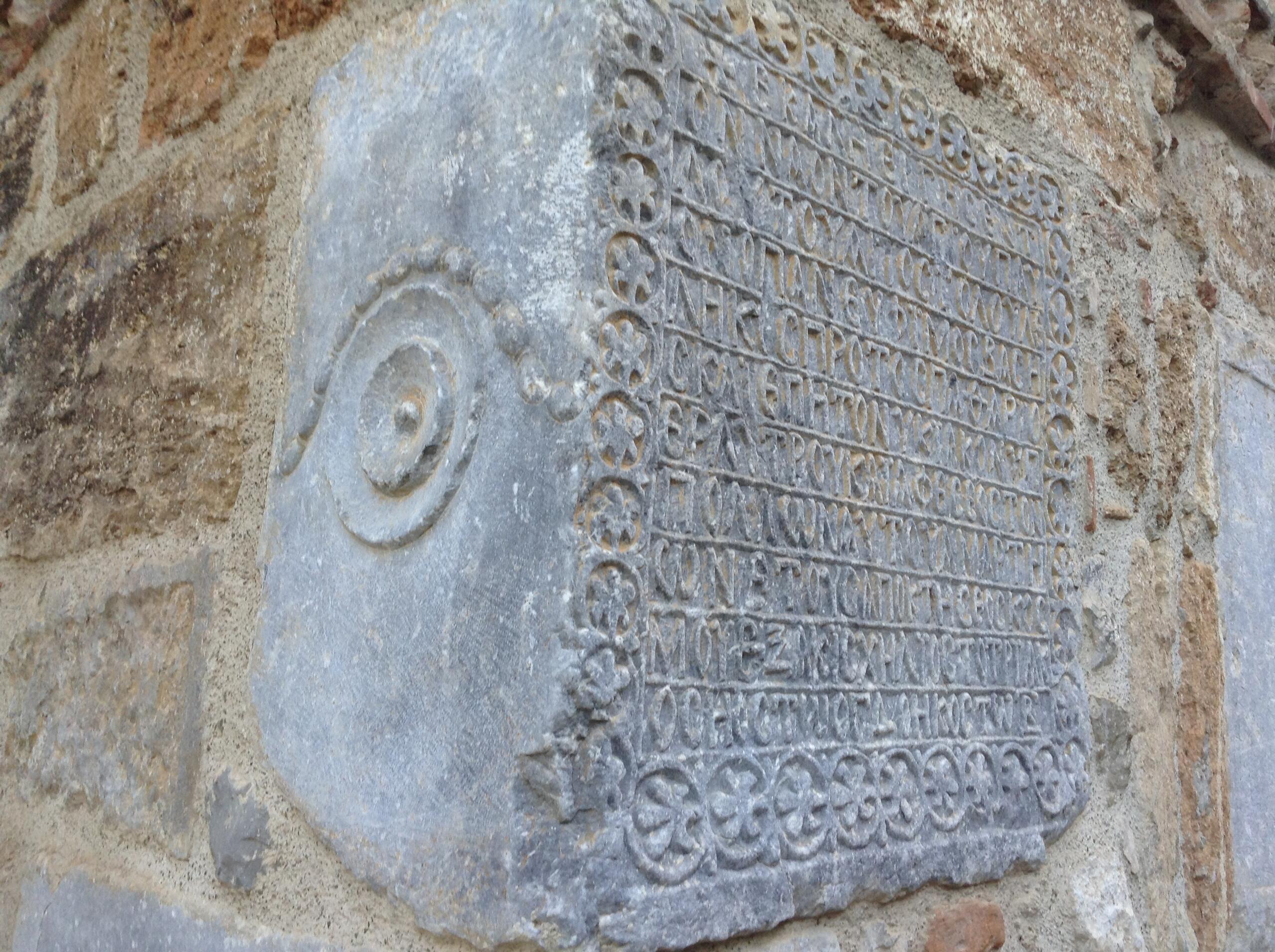
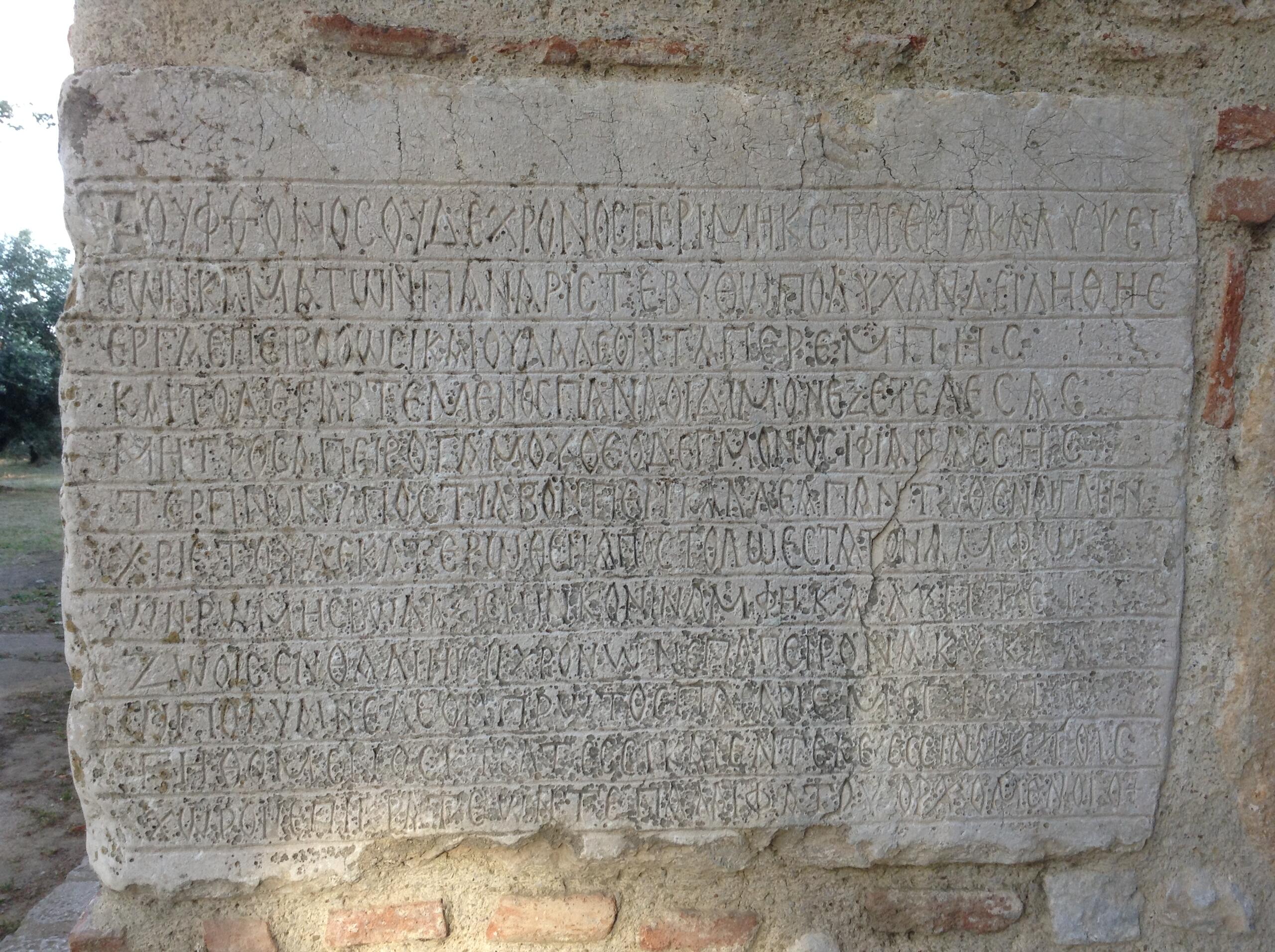
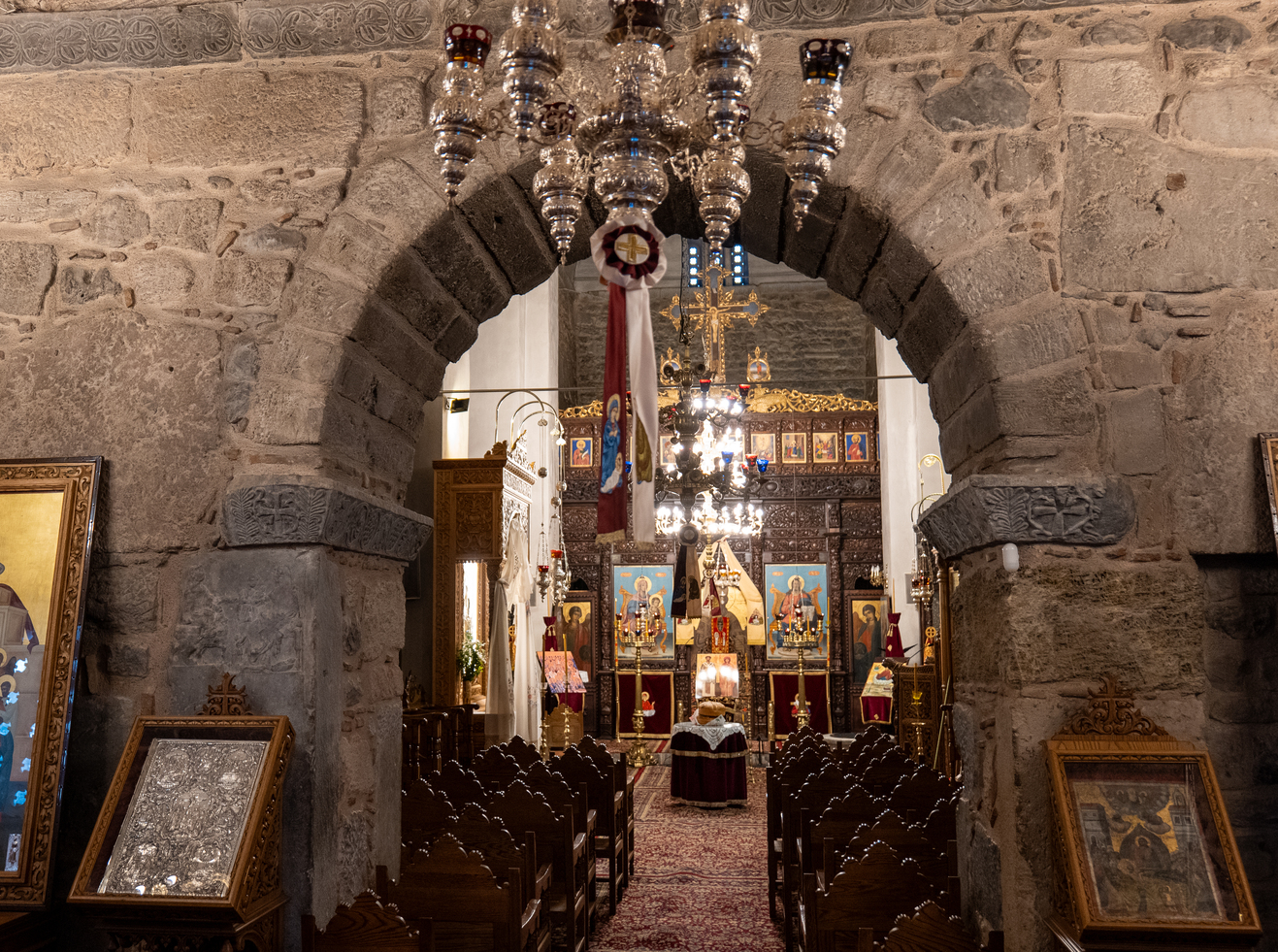
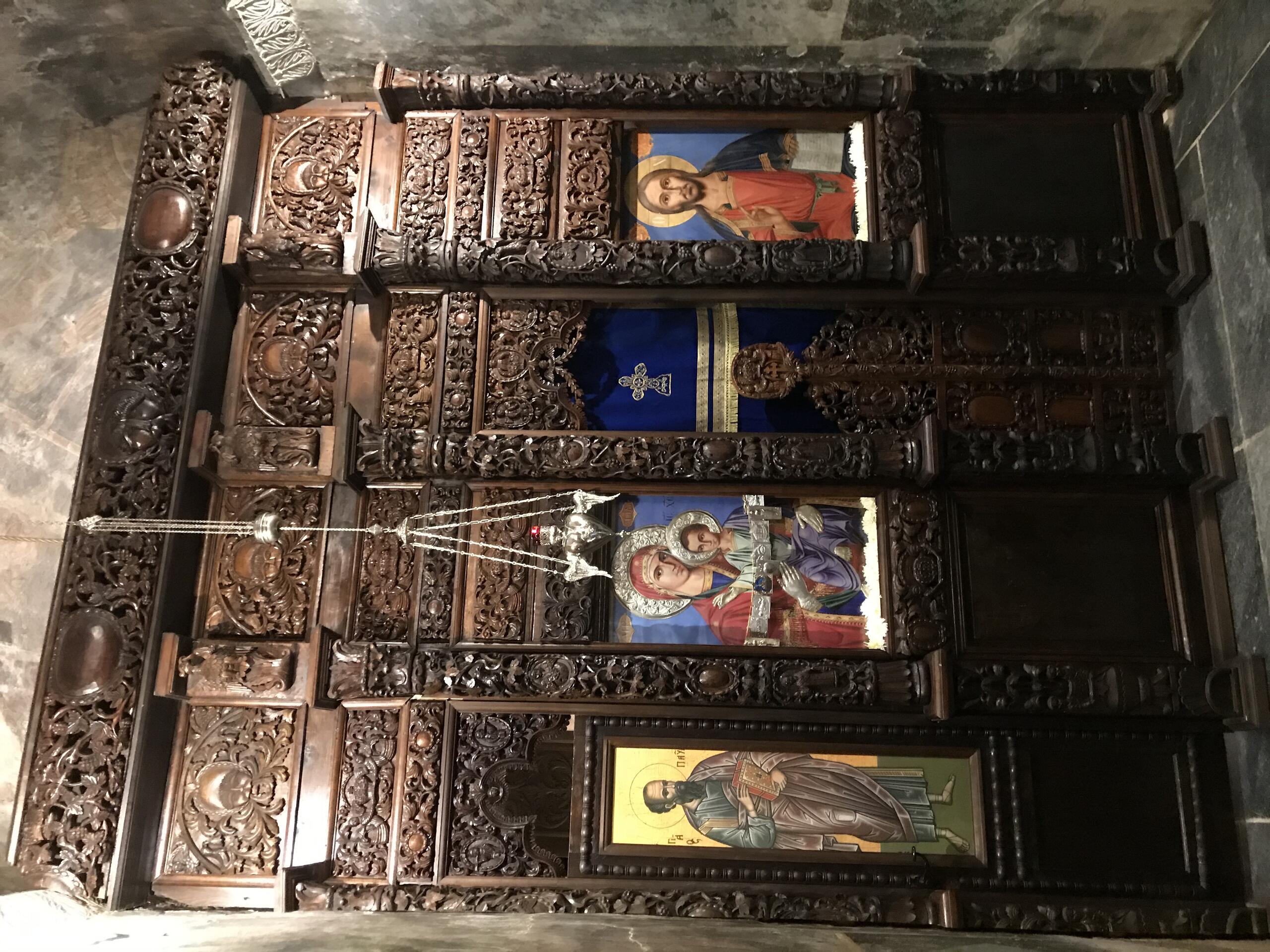
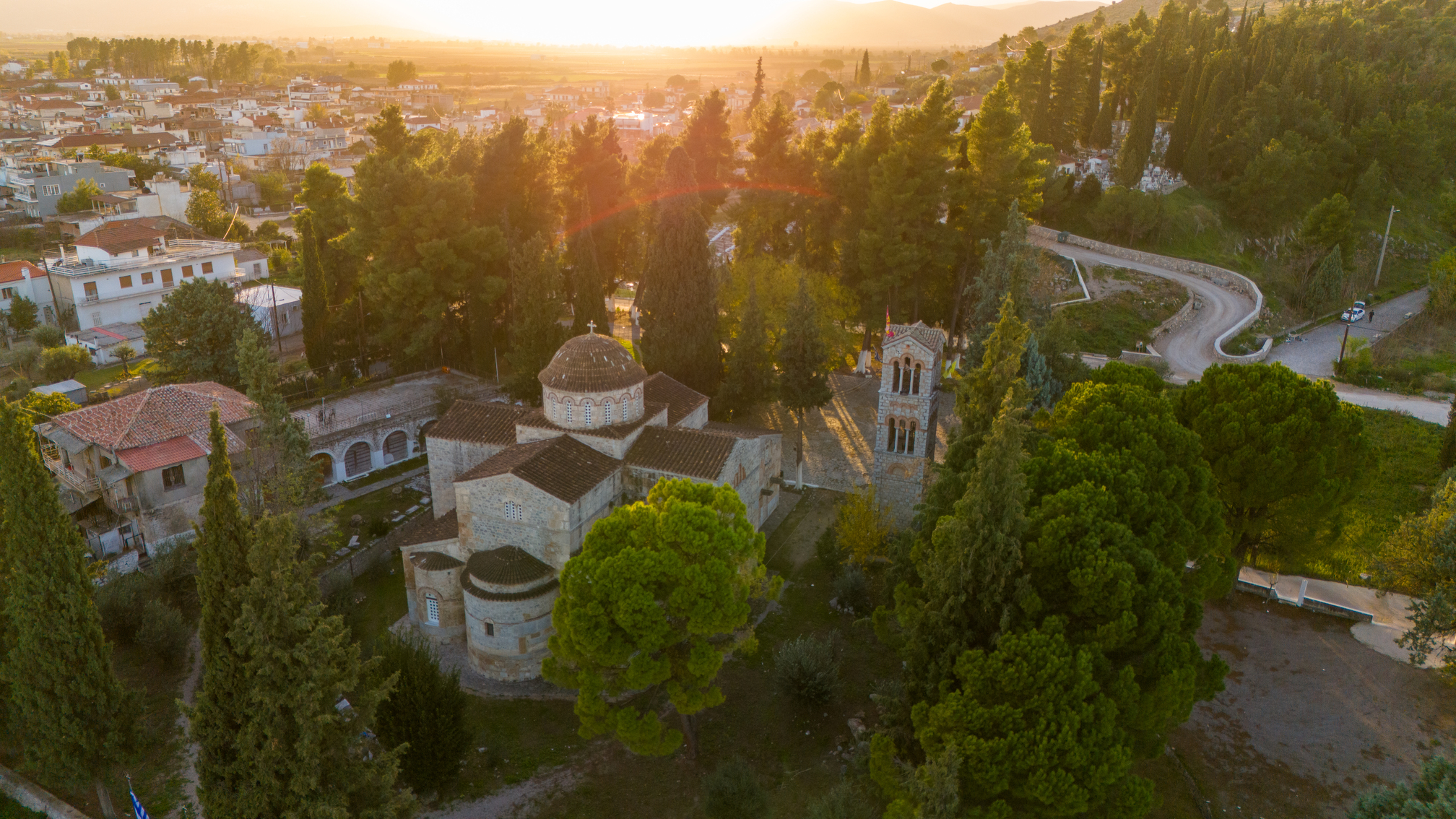
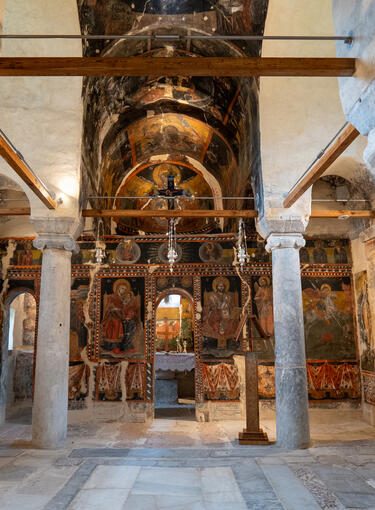
The “Panagia Skripou” monastery (as the Dormition of the Virgin Mary church in Orchomenus is called) is the oldest byzantine monument in Boeotia and one of the most significant byzantine monuments in Greece. The Panagia Skripou monastery, in its current shape roughly, was built in 873/874 AD, likely as a funerary monument for Leo, a protospatharios (a senior officer) of the Byzantine emperor's palace guard. This is documented by the discovery of two grand Byzantine tombs—presumably belonging to Leo and his
wife—found to the right upon entering the church, during a recent excavation. During this excavation, a mosaic floor was also uncovered, located about seventy centimeters below the current floor of the church, and dated to 480 AD. This evidence demonstrates that the church was constructed atop a prior early Christian Basilica.
The church serves as the Catholikon (main church) of a men's monastery and is dedicated to the Dormition of the Virgin Mary as well as to the apostles Peter and Paul, as indicated by the threefold sanctuary. The two eastern side aisles do not function as a prothesis and diakonikon (subsidiary chapels for preparation and storage), but, according to inscriptions, serve as chapels dedicated to Saints Peter and Paul. An epigram inscribed there describes the apostles as "whose sacred relics Rome's vault encloses."
For hundreds of years, the church served as the Catholikon of the male monastery of Skripou. The beautiful monastery gate and one wing of the old monastic cells survive to this day. The monastery's vast assets enabled it to undertake significant works. It is recorded that, after the liberation of Greece, the monastery of Skripou owned 60,000 stremmas (approximately 14,820 acres) of land. However, this vast estate no longer exists, as it was distributed over time to local landless farmers.
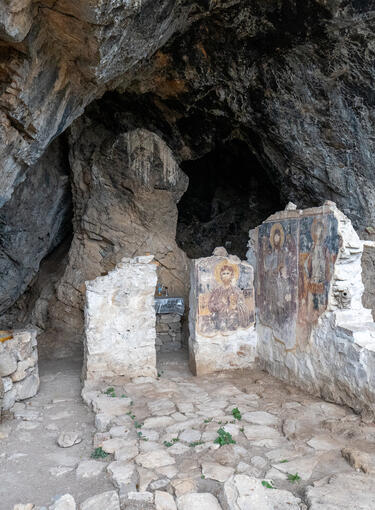
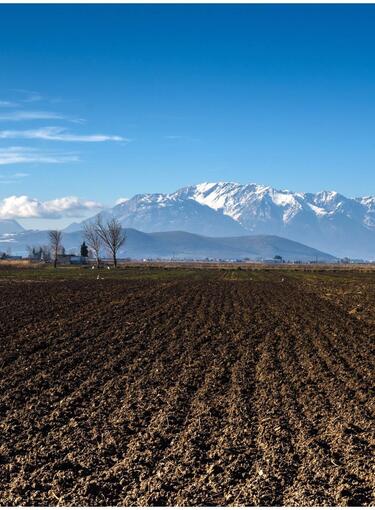
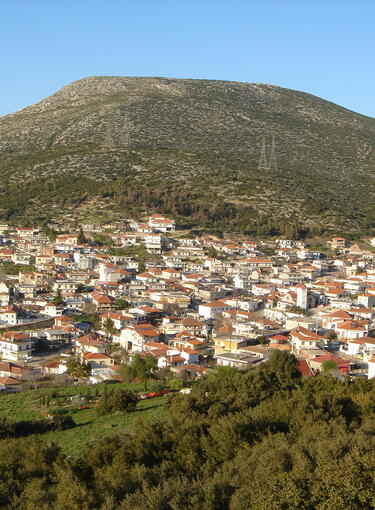
During the period of Ottoman rule, Orchomenus was never subjected to the forced recruitment of young men (known as paidomazoma), nor were the Turks ever able to capture girls for the harems of the Sultan or the pashas. This was because the abbots of Panagia Skripou always had two monks on constant watch, 24 hours a day. One monk would stand on a hill opposite Panagia to monitor the plains toward Livadea, where the Pasha was stationed, and the plains toward Karya, a small nearby village, where the Agha's base was (the Turks never settled directly in Orchomenus). The second monk would keep watch from the old bell tower behind the monastery's cells. If the first monk saw suspicious activity, he would light a fire. Upon seeing the smoke, the second monk would ring the church bells, alerting mothers to take their children to the church. Inside the church, in the narthex, there was a trapdoor leading to a tunnel. This tunnel ran beneath the monastery courtyard and reached the opposite hill, where the chapel of Saint Anargyroi is located. From there, a second tunnel led to the ancient Acropolis of Orchomenus. The monks would hide the children in this tunnel and seal the
trapdoor. When the Turks arrived and searched for children, they would find none, as they had already been taken to the hilltop. This secret was never betrayed throughout the Ottoman rule, and the Turks never discovered the trapdoor. Unfortunately, as a result, the monks were often punished by the Turks.
It is said that the great philhellene Lord Byron visited the Monastery of Skripou and was deeply impressed by the abbot then. This abbot, named Nikiforos, was an exceptionally educated man, broad-minded, and very influential. He contributed significantly to the Greek struggle for independence, particularly after the destruction of the monastery. According to travelers Pouqueville and Leake, during the years of the Revolution, about 60 monks lived in the monastery. Because the monks supported the armed chieftains of Roumeli, the pasha of Livadea raided the monastery, killing many monks and setting the monastery and church on fire. The intense heat caused much of the plaster in the church to fall, destroying most of the frescoes/icons. The surviving monks fled the area with Abbot Nikiforos and sought refuge at the Monastery of Agia Eleousa near Vartholomio in the Ileia (Elis) region.
At Agia Eleousa, Abbot Nikiforos continued his work, actively aiding the revolutionary leaders of the Morea. He himself participated in many battles and was described as a highly educated, intelligent, and tenacious man, who loved his homeland deeply. Many contemporaries found it difficult to determine whether he loved his faith or his country more. After the liberation of Greece, some monks returned to the monastery, while others, including Abbot Nikiforos, chose to remain in the Peloponnese. Damaskinos took over as Abbot of the monastery and visited Nikiforos in Elis to retrieve the Monastery’s holy relics and artifacts, which the monks had taken with them when they fled.
During the Bavarian rule, the then King of Greece, Otto, visited the monastery. This visit highlights the fact that even after Greece's liberation, the monastery retained its prestige and reputation. The Monastery of Skripou also hosted the renowned German archaeologist Heinrich Schliemann, who spoke highly of the then abbot, Theodosios. Inscriptions indicate that significant works were carried out in the monastery, during Theodosios’s leadership. Schliemann wrote: “I stayed at the Monastery of Panagia Skripou, and every afternoon we drank coffee with the kind abbot Theodosios under the great cypress tree near the entrance to Panagia.” That
same cypress tree still stands in the churchyard today.
In subsequent years, the monastery became a dependency (metochi) of the Monastery of Saint Seraphim of Domvou. Following the expropriation of its lands, the local ecclesiastical authority and the Metropolitan of Thebes and Livadea, decided to grant the church of Panagia to the parishioners of the Skripou community, making it a parish church. So, the last monks left Orchomenus for the Monastery of Saint Seraphim of Domvou, taking with them all the holy relics, sacred treasures, and many icons, which are now housed at the Saint Seraphim Monastery.
In 1926, Panagia Skripou was declared a historic monument. In subsequent years, the monastery cells were repurposed many times, hosting the Greek School, displaced refugee families from Asia Minor and Thrace, Orchomenus’s first high school, and the Gendarmerie Station. The church celebrates five times a year: On January 16, the Feast of the Veneration of the Chains of Apostle Peter, is marked with a vigil in Apostle Peter's chapel. On June 29, the Feast of Saints Peter and Paul, is celebrated with a vigil at Apostle Paul’s chapel. On August 15, the Feast of the Dormition of the Virgin Mary, is a major celebration for the church. This feast was
established when Panagia became a parish church.
On August 23, the "Afterfeast" of the Dormition, also known as the "Nine Days of the Virgin Mary," is a traditional monastic celebration and one of the largest festivals in the Boeotia region. During the evening prayers, a small epitaph representing the Virgin's body is decorated, hymns are chanted in her honor, and the epitaph is carried in a procession to the parish's central square, where bread offerings are blessed and the Metropolitan delivers a sermon.
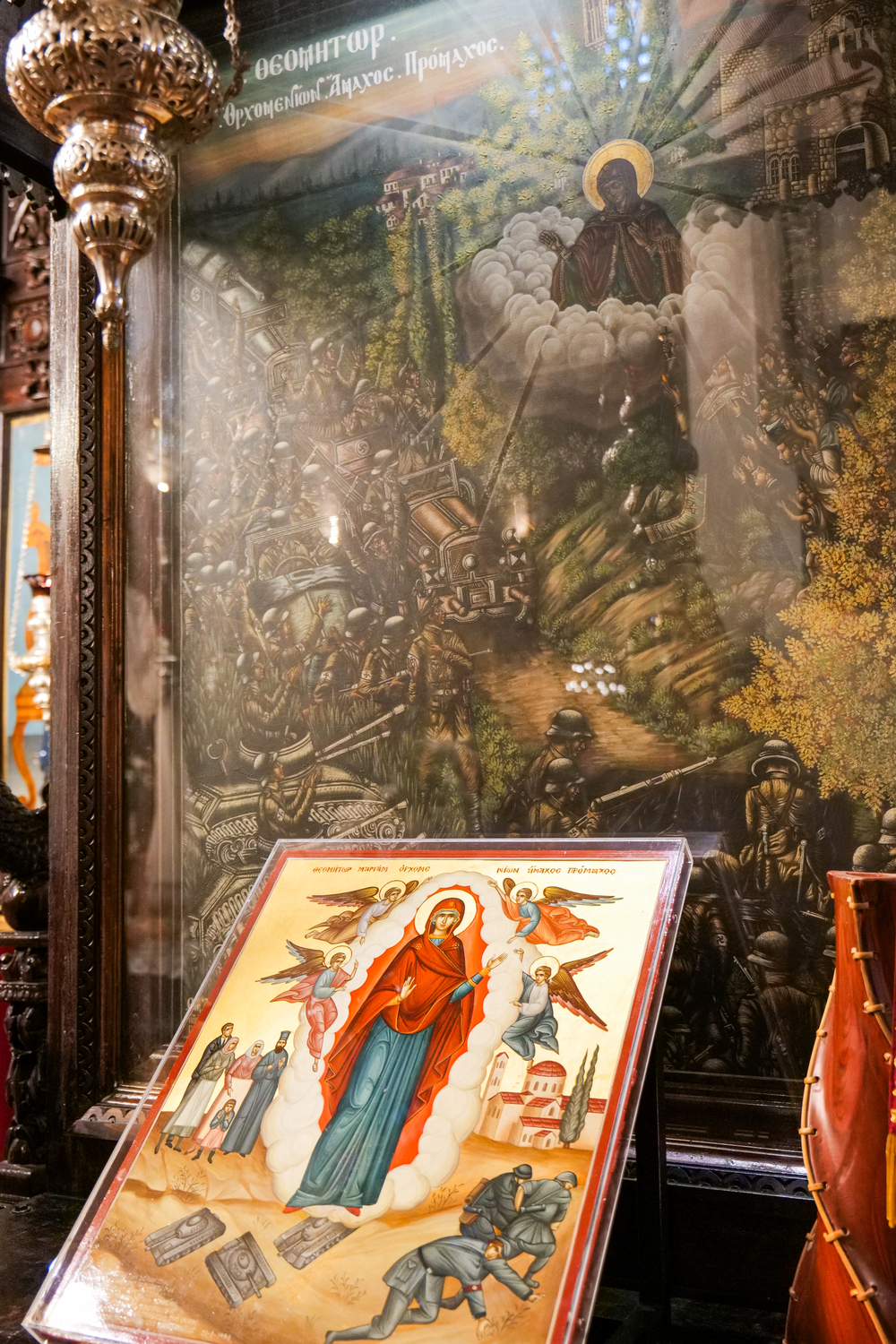
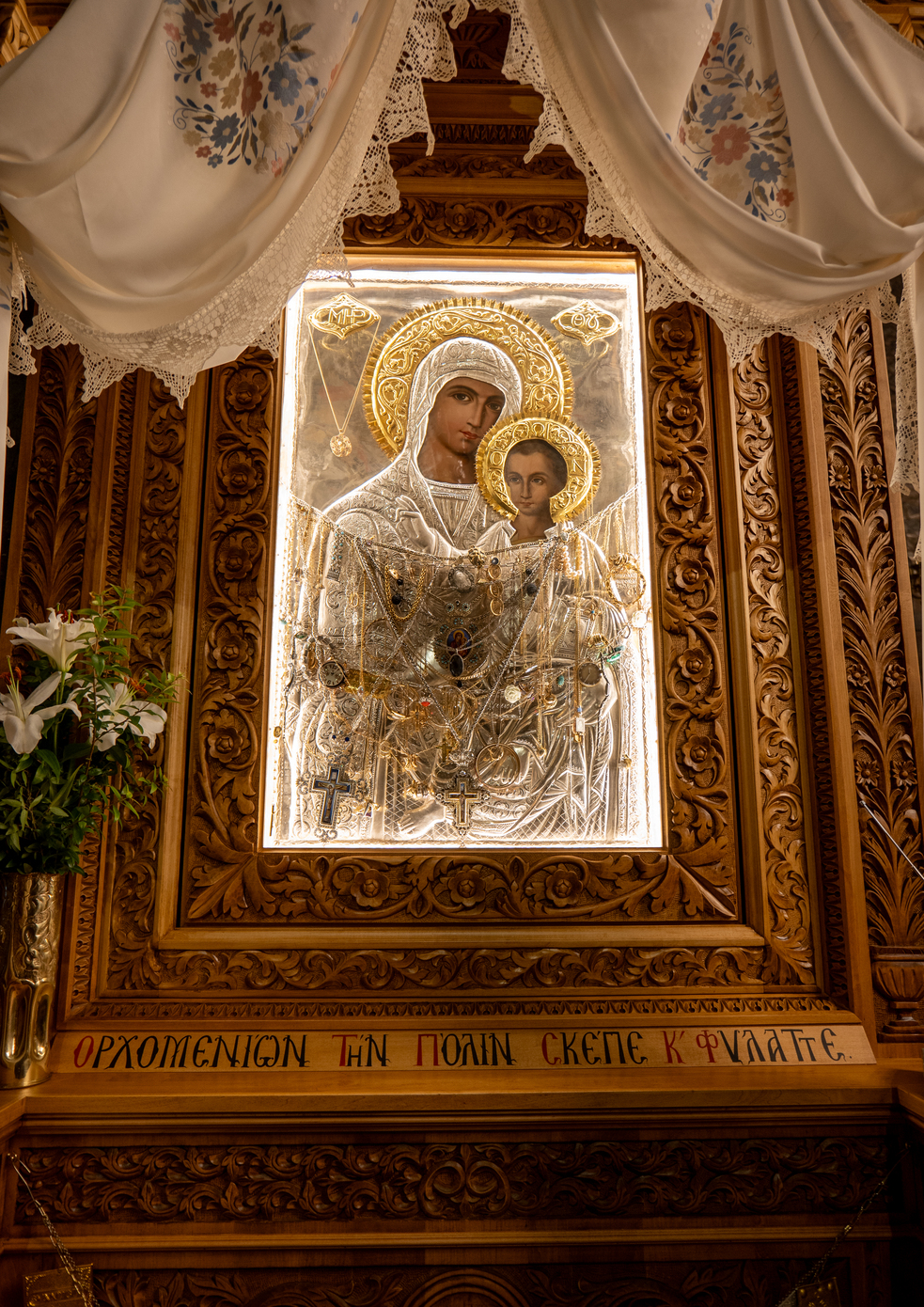
On September 10, Orchomenus official town feast, is the celebration commemorating the miraculous intervention of Panagia on September 10, 1943, when the residents of Skripou and Petromagoula were saved from the German occupation forces. Inside the church, the “Beautiful Panagia” icon, painted in Russian style, is venerated as miraculous. The German officer Hofmann reportedly recognized in the icon the woman who stopped the German tanks.